Private lenders are under pressure to move loans faster without losing control of the work behind each file. Borrowers expect quicker responses. Teams need cleaner handoffs. Documents, approvals, tasks, and compliance steps have to stay organized from application to funding.
That is why more lenders are replacing spreadsheets, inboxes, and disconnected tools with dedicated loan origination software.
If you are asking what is an LOS, the short answer is this: a loan origination system is the software lenders use to manage the loan origination process from borrower intake through funding. For private lenders, the right LOS can help reduce manual work, improve visibility, and keep every deal moving through a more consistent workflow.
What Is Loan Origination?
Loan origination is the process of taking a loan from the first application or deal submission through approval and funding.
For private lenders, that process often includes:
- borrower or broker application
- document collection
- borrower, entity, and property review
- underwriting
- conditions management
- loan approval
- document generation
- signing and closing
- funding
- transition to loan servicing
Origination is different from loan servicing. Origination covers the work required to approve and fund the loan. Servicing begins after funding and includes payments, statements, borrower communication, renewals, payoff, and ongoing portfolio activity.
What Is a Loan Origination System?
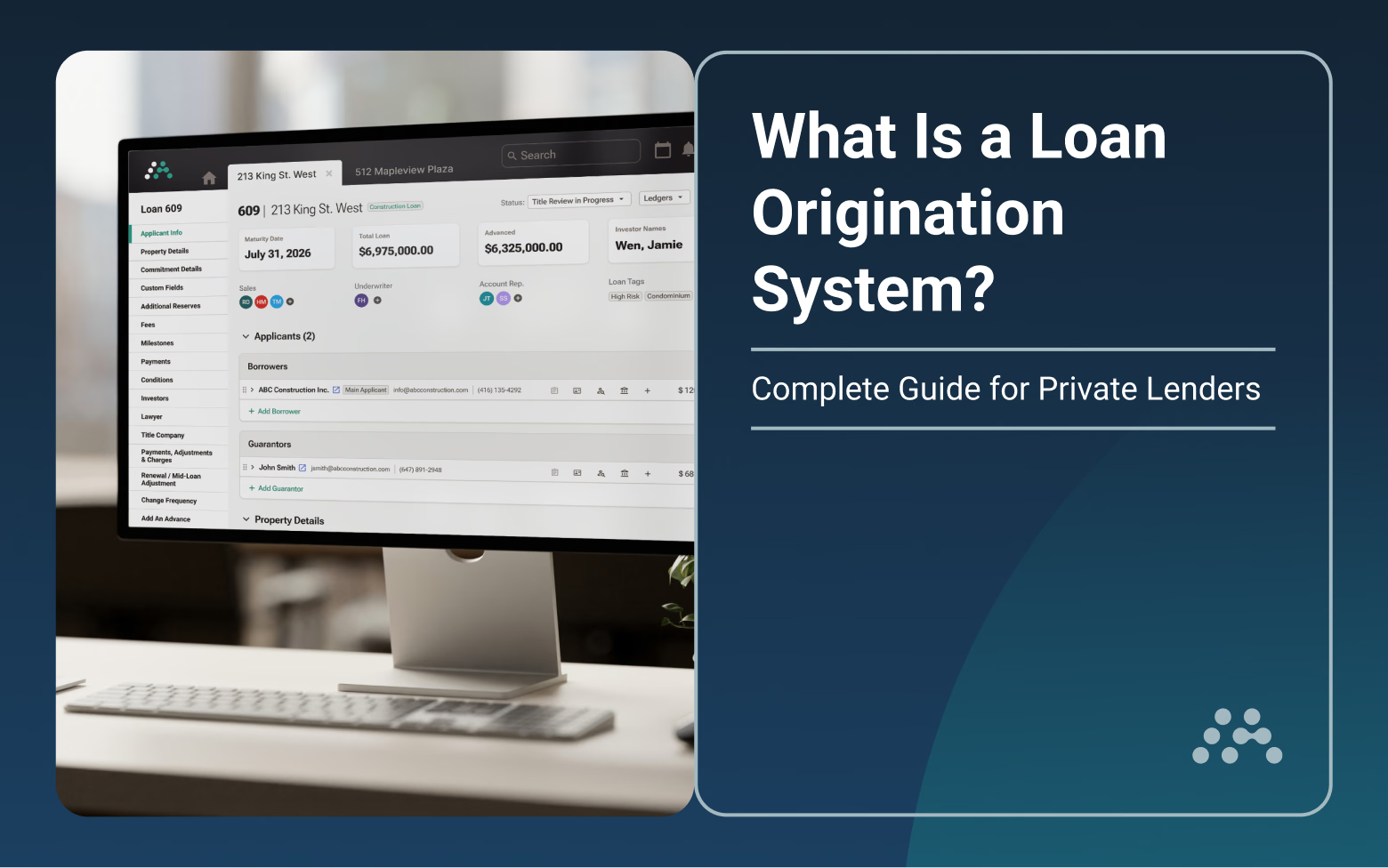
A loan origination system, often called an LOS, is software that helps lenders manage loans from application to funding. It gives teams one place to track loan records, documents, tasks, approvals, communication, and workflow status.
An LOS is more than a document storage tool. A modern system can support:
- workflow automation
- centralized loan management
- task tracking
- document generation
- borrower and broker communication
- compliance support
- audit trails
- reporting
For private lenders, the LOS becomes the operational hub for the origination team. It helps everyone understand where a file stands, what is missing, who owns the next task, and what needs to happen before funding.
How a Loan Origination System Works
A loan origination system helps move each file through a defined workflow.
It usually looks like this:
- A borrower or broker submits an application.
- The system creates a loan record.
- Required documents are requested and stored.
- Tasks are assigned to the right team members.
- Underwriting reviews the file.
- Conditions are tracked.
- Approvals are recorded.
- Loan documents are generated.
- The file moves toward closing and funding.
Instead of each team member managing their own checklist, the system keeps the loan process visible and repeatable.
Key Features of a Modern LOS
The best loan origination software should help lenders manage daily origination work with fewer manual steps.
Common LOS features include:
- Online borrower applications: Collect borrower, broker, entity, property, and loan information digitally.
- Custom workflows: Build workflows around the way your team reviews, approves, and funds loans.
- Automated document generation: Create term sheets, commitment letters, legal packages, and other loan documents from system data.
- Pipeline management: Track every loan by stage, owner, status, and next step.
- Role-based permissions: Control who can view, edit, approve, or manage different parts of the loan file.
- Reporting dashboards: Monitor pipeline activity, team workload, funding timelines, and operational performance.
- E-signature integrations: Support faster document execution and closing workflows.
- Compliance tracking: Keep required steps, approvals, and records connected to the file.
- CRM integrations: Connect borrower and broker activity where needed.
- Loan servicing integrations: Help the funded loan move into the next stage of the lifecycle with fewer manual handoffs.
The system needs to help people, documents, approvals, and deadlines move together.
Signs Your Lending Business Needs an LOS
A private lender may not need a full LOS on day one. But as volume grows, manual tracking usually becomes harder to manage.
Common signs include:
- loan status lives in spreadsheets
- documents are scattered across inboxes and folders
- staff spend too much time chasing updates
- approvals depend on manual follow-up
- borrowers or brokers keep asking for status
- reporting takes too long to prepare
- compliance records are hard to review
- funded loans need manual cleanup before servicing
- the team wants to grow without adding more admin work
A strong LOS can help private lenders process loans faster, reduce errors, improve borrower experience, support team collaboration, and create better reporting. It gives the business a more scalable way to manage origination.
How to Choose a Loan Origination System
Knowing how to choose a loan origination system starts with workflow fit. Private lenders should look for software that supports their lending model, not a generic platform that has to be forced around it.
Important evaluation criteria include:
- Industry specialization: Is the platform built for private lending workflows?
- Ease of implementation: How quickly can the team move from manual tools or legacy systems?
- Workflow customization: Can the system support your loan types, approval paths, and document requirements?
- Automation capabilities: Can it reduce manual tasks, reminders, and status updates?
- Reporting functionality: Can managers see pipeline, performance, and funding activity clearly?
- Integrations: Does it connect with the tools your team already uses?
- Security and compliance: Does it support permissions, audit trails, secure documents, and compliance workflows?
- Scalability: Can it support more loans, users, products, and workflows over time?
- Customer support: Will the vendor help your team implement and improve the system?
- Total cost of ownership: What manual work, errors, or extra tools can the platform help reduce?
The right LOS should make the origination process easier to manage today and strong enough to support the business as loan volume grows.
Why Mortgage Automator Is Built for Private Lenders
Mortgage Automator is private lending software built to support the complete lending lifecycle, from origination to servicing, fund management, reporting, and automation.
For origination teams, Mortgage Automator supports:
- borrower and broker portals
- custom workflows
- pipeline tracking
- task management
- document automation
- compliance support
- reporting dashboards
- investor reporting
- servicing handoffs
- fund management connections
Mortgage Automator supports private lenders beyond the first approval. Teams can manage origination workflows, prepare documents, track pipeline activity, move funded loans into servicing, and keep fund and investor workflows connected to the same operating record.
That makes it a better fit for private lenders that need more than a basic LOS. Instead of managing origination in one system and rebuilding context after funding, teams can keep the work connected across the lending lifecycle.
Frequently Asked Questions
What is a Loan Origination System?
A Loan Origination System, or LOS, is software that helps lenders manage loans from application to funding. It supports loan records, documents, tasks, approvals, communication, compliance steps, and reporting.
What is loan origination?
Loan origination is the process of taking a loan from application through review, approval, document preparation, closing, and funding. It is the pre-funding part of the lending lifecycle.
How does a Loan Origination System work?
A Loan Origination System creates a structured workflow for each loan. It helps teams collect applications, request documents, assign tasks, track conditions, manage approvals, generate documents, and prepare the file for funding.
What features should a Loan Origination System include?
A modern LOS should include borrower applications, custom workflows, document generation, pipeline management, permissions, reporting dashboards, e-signature integrations, compliance tracking, and servicing connections.
How do I choose a Loan Origination System?
Choose a loan origination system based on workflow fit, industry specialization, automation, reporting, integrations, security, implementation support, scalability, and total cost of ownership. Private lenders should prioritize software built around private lending workflows.
What is the difference between loan origination and loan servicing?
Loan origination covers the work before funding, including intake, underwriting, approval, and document generation. Loan servicing begins after funding and includes payments, statements, borrower communication, renewals, payoff, and ongoing loan management.
Is Mortgage Automator a Loan Origination System?
Yes. Mortgage Automator supports loan origination with borrower and broker portals, custom workflows, pipeline tracking, task management, document automation, compliance support, and reporting. It also connects origination with servicing, fund management, and automation.