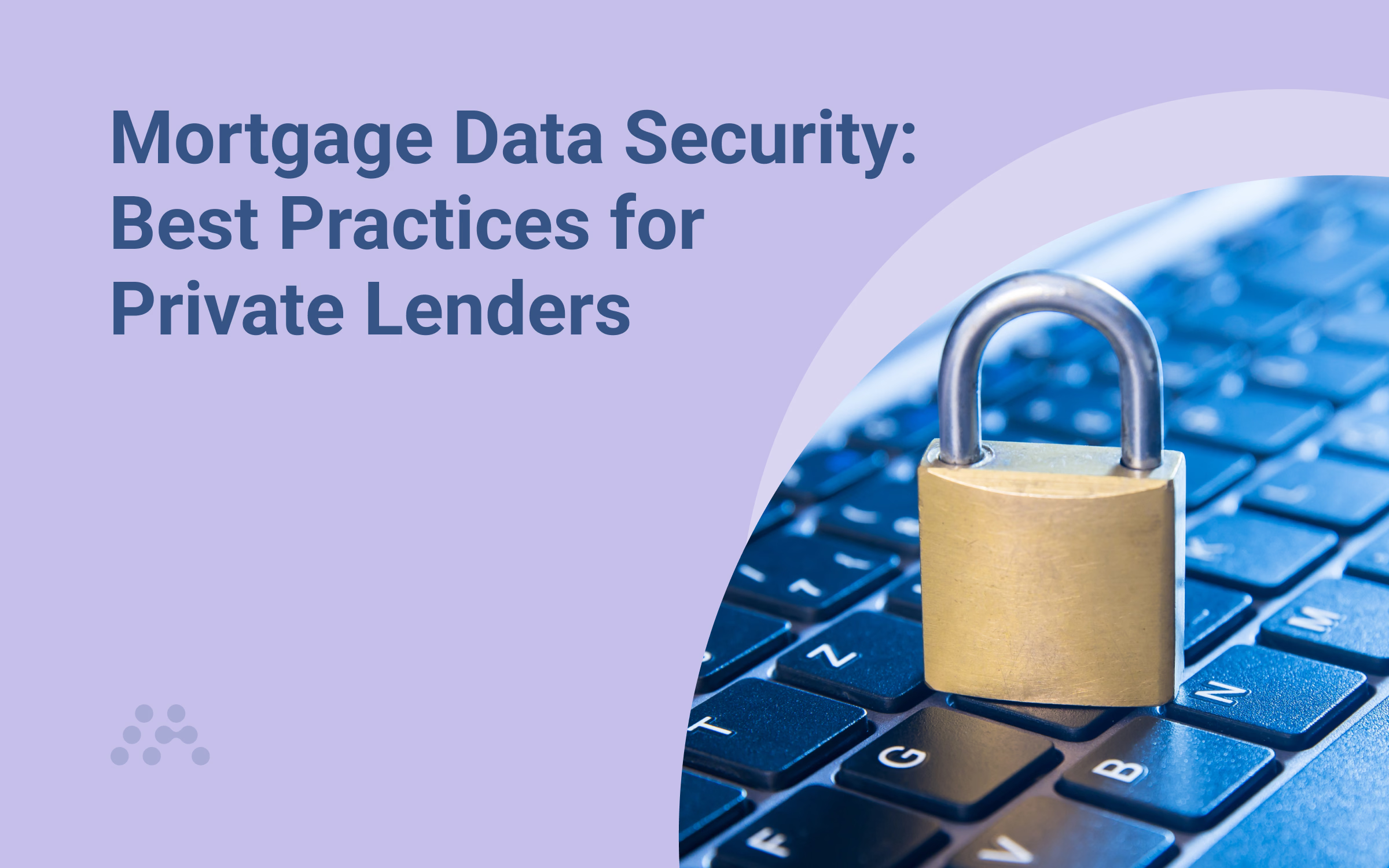
Private lenders manage highly sensitive information across every loan file: borrower records, financial documents, bank details, investor data, tax documents, identity records, approvals, and payment history. That makes mortgage data security a core part of lending operations.
As lending teams digitize more of the loan lifecycle, security can no longer sit outside the workflow. Files move between origination, underwriting, servicing, reporting, compliance, and investor communication. Each step creates another place where access, documents, permissions, and activity need to be controlled.
Strong data security for private lenders protects more than compliance. It helps preserve borrower trust, investor confidence, operational continuity, and the lender’s reputation.
Why Mortgage Data Security Matters
Private lending teams work with information that can cause serious harm if exposed, shared incorrectly, or accessed by the wrong person. A single loan file may include personal information, financial statements, entity records, property details, banking information, tax documents, appraisals, and signed agreements.
That risk grows when data is managed across inboxes, spreadsheets, shared drives, local downloads, and disconnected tools. The more places sensitive information lives, the harder it becomes to control access, track activity, enforce retention policies, or prepare for an audit.
Strong loan data security gives lenders a more controlled way to manage sensitive records across the lending process. It helps teams know who can access information, where documents are stored, how activity is tracked, and how records are protected.
What Private Lenders Need to Protect
Private lenders need to protect both borrower and investor information. These records often move through multiple teams and workflows, which makes access control and document security especially important.
Sensitive information may include:
- borrower names, addresses, and contact details
- financial statements and income records
- bank account information
- tax documents
- identity verification documents
- entity and guarantor records
- loan applications and approval records
- collateral and property documentation
- investor profiles and account records
- investor statements and transaction history
- servicing and payment records
This information supports daily lending work, but it also creates responsibility.
Common Data Security Risks for Private Lenders
Most data security risks are operational before they become technical. A weak password, a forwarded document, outdated user permissions, or a spreadsheet shared with the wrong person can create exposure.
Common risks include:
- Phishing attacks: Staff may be targeted through fake emails, login pages, invoice requests, or document links.
- Ransomware: Attackers can lock files or systems and disrupt lending operations.
- Weak passwords: Reused or simple passwords increase the risk of unauthorized access.
- Unauthorized user access: Former employees, contractors, or staff with excessive permissions may retain access to sensitive information.
- Third-party vendor risks: External tools and service providers can introduce security gaps if they are not properly reviewed.
- Manual file sharing: Email attachments and shared folders make it harder to control document access.
- Spreadsheet-based processes: Sensitive borrower or investor data can spread quickly through copied files and local downloads.
- Insider threats: Internal misuse, accidental sharing, or poor access controls can create risk from inside the organization.
Reducing these risks requires both secure technology and better operating discipline. Lenders need clear access rules, secure document handling, user activity tracking, and regular review of how data moves across the business.
Regulatory Requirements and Ongoing Compliance
Security compliance is an ongoing process, not a document lenders prepare once and forget.
Private lenders need to understand how data protection requirements affect borrower records, investor information, document retention, vendor relationships, user access, and incident response. Strong security practices can also support the lender’s reputation because borrowers, investors, partners, and auditors increasingly expect more mature data controls.
Practical compliance work includes:
- documenting access policies
- reviewing vendor security standards
- maintaining data retention rules
- preparing incident response plans
- monitoring user activity
- reviewing permissions regularly
- keeping audit trails available
- aligning security controls with internal policies
Security frameworks can make audits easier by giving lenders a consistent way to demonstrate how data is protected, who can access it, and what controls are in place.
Zero Trust Security Best Practices
Zero Trust is based on a simple principle: access should be earned, limited, and continuously reviewed. Users should only have the permissions they need, and systems should verify activity rather than assume every user or device is safe.
For private lenders, practical Zero Trust controls include:
- least-privilege access so users only see the records they need
- identity verification before access is granted
- strong password management and secure authentication practices
- session controls to reduce exposure from unattended or shared devices
- device security for staff working across offices or remotely
- secure remote access for distributed teams
- user activity logging to support monitoring and audit review
- continuous monitoring for unusual or risky activity
Layered security reduces breach risk because one control does not carry the entire burden. If a password is compromised, permissions, logging, session controls, and monitoring can help limit exposure.
Choosing Secure Mortgage Software
The software private lenders use to manage loans should support security as part of daily work. A secure platform should make it easier to control data access, manage documents, track activity, and support compliance without forcing teams to build separate manual processes around every file.
When evaluating secure mortgage software, lenders should look for:
- role-based permissions
- secure document storage
- encryption for sensitive information
- user authentication controls
- audit logs
- activity monitoring
- reliable data backup and retention practices
- vendor security documentation
- support for compliance workflows
The right secure loan management software should protect borrower and investor data while still helping teams move files through origination, servicing, reporting, and review.
Employee Training and Internal Security
Technology cannot protect data if staff do not know how to handle it. Employees need clear expectations for passwords, document sharing, device use, email security, and access requests.
Training should cover practical situations staff see every day:
- how to recognize phishing attempts
- when to avoid sending documents by email
- how to handle sensitive borrower or investor records
- how to report suspicious activity
- why permissions should not be shared
- when to remove access for former employees or vendors
- how to use approved systems for document storage
How Mortgage Automator Protects Private Lenders
Mortgage Automator helps private lenders manage sensitive loan, borrower, investor, document, and servicing data, with built-in security controls.
Its security features include:
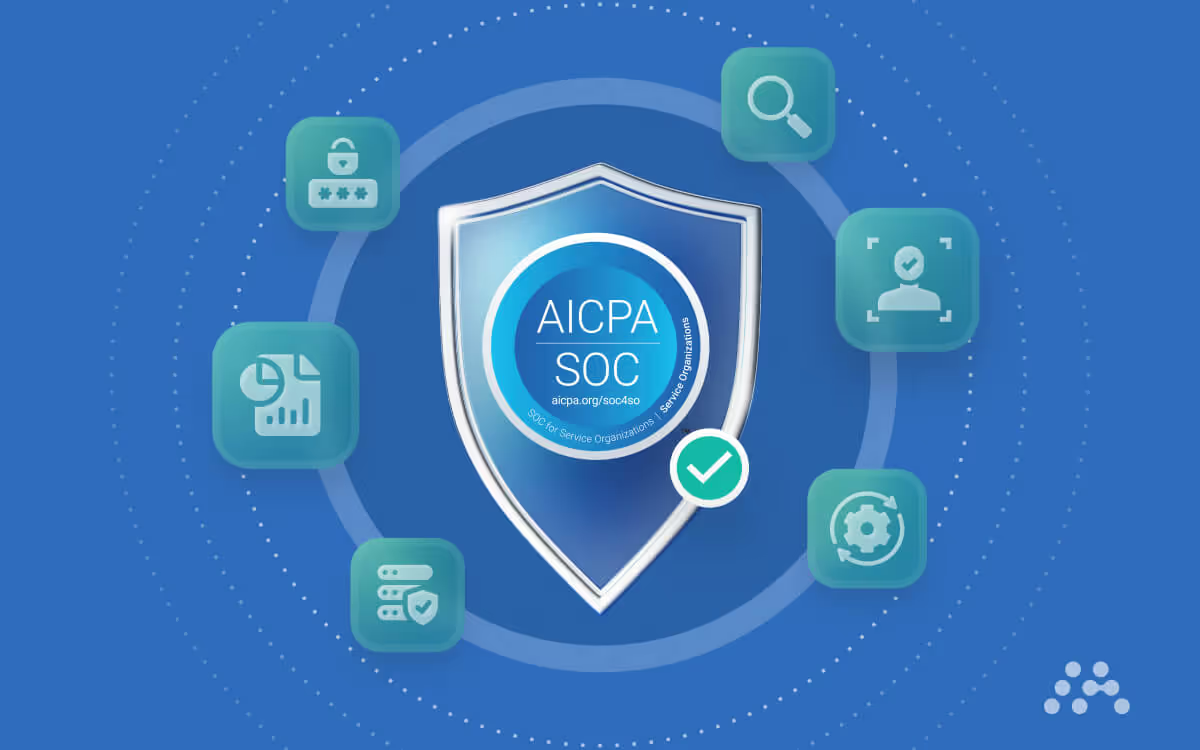
- SOC 2 Type II certification
- AES-256 encryption
- role-based permissions
- audit logs
- secure document storage
- user authentication
- activity monitoring
These controls help lenders reduce operational risk while supporting daily lending workflows. Teams can manage loan records, documents, approvals, investor information, and servicing activity inside a secure platform instead of spreading sensitive data across spreadsheets, inboxes, and shared folders.
Frequently Asked Questions
Why is mortgage data security important?
Mortgage data security is important because lenders manage sensitive borrower, investor, financial, and loan information. Strong security controls help protect client trust, reduce operational risk, and support compliance.
What security features should mortgage software include?
Mortgage software should include role-based permissions, encryption, secure document storage, user authentication, audit logs, activity monitoring, and reliable data controls.
What is SOC 2 Type II certification?
SOC 2 Type II certification evaluates how a service organization manages controls related to security, availability, processing integrity, confidentiality, or privacy over a period of time. For lenders, it can provide added confidence that a software provider follows strong security practices.
How does encryption protect loan data?
Encryption helps protect sensitive information by making data unreadable without the proper access or keys. For lenders, this adds protection for borrowers, investors, documents, and loan records stored inside a secure platform.
How does Mortgage Automator keep lender data secure?
Mortgage Automator supports lender data security with SOC 2 Type II certification, AES-256 encryption, role-based permissions, audit logs, secure document storage, user authentication, activity monitoring, and continuous security updates.