
Most lending operations feel manageable early on. The problems show up when volume starts to increase.
Manual steps pile up, processes slow down, and small inefficiencies start to affect deal flow. For many private lenders, growth starts to expose how their operations are set up to handle it.
Traditional loan origination systems don’t make this easier. They’re often rigid, slow to adapt, and rely on developers for even small workflow changes. That creates delays where speed matters most.
Modern platforms like Mortgage Automator are built to remove that dependency, giving lending teams direct control over how their processes run.
To make this practical, let’s look at seven LOS workflows private lenders can automate without coding.
Why Traditional LOS Systems Slow Down Private Lenders
Traditional loan origination systems aren’t built to adapt quickly as lending operations grow. The limitations are easy to overlook early on, but as volume increases, they start to create friction across the entire process.
Instead of supporting scale, these systems introduce delays, dependencies, and gaps that slow teams down. You can see it in how everyday workflows start to break down:
- Heavy developer dependency: Even small workflow changes require technical support. This makes it harder for teams to adjust processes quickly as new deals come in.
- Slow workflow changes: Updating workflows takes time and often involves multiple steps. That lag can delay decisions and slow down deal execution.
- Fragmented loan processes: Workflows are spread across different tools and systems. This creates unnecessary handoffs and increases the risk of things falling through the cracks.
- Manual compliance handling: Compliance tasks often rely on manual tracking and follow-ups. This adds extra work and increases the likelihood of errors.
What Is Workflow Automation in LOS Without Coding?
Workflow automation in a loan origination system (LOS) refers to how tasks, decisions, and processes move through the lending pipeline. Loan origination system automation helps reduce manual coordination across the lending process. Traditionally, setting this up required developer support or system customization, which made it harder to respond when processes needed to change.
A no-code approach removes that barrier. Instead of relying on technical teams, lending operations can define and adjust workflows directly, making workflow automation in LOS without coding far more practical for day-to-day operations.
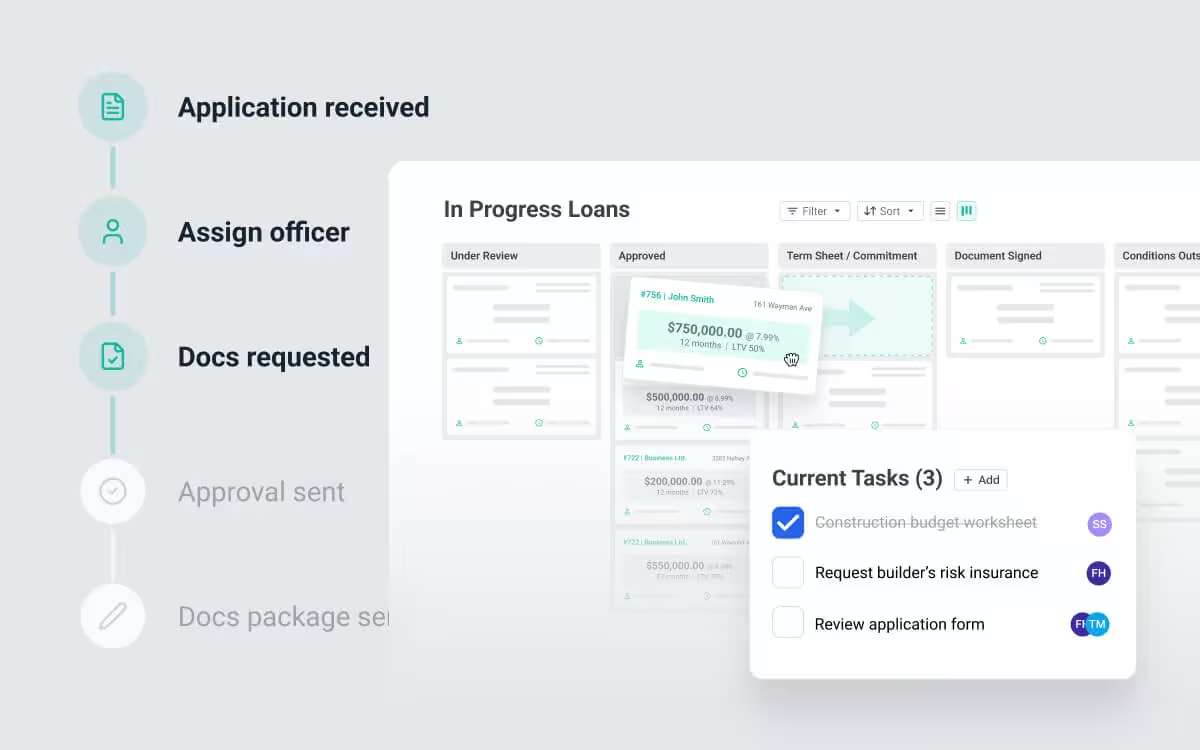
Platforms like Mortgage Automator provide a visual way to build and manage these processes. Teams can configure loan origination flows, set rules for task routing and approvals, and automate compliance checks without writing code.
These workflows can also connect with other systems, such as underwriting tools, credit providers, and document management platforms, so information moves consistently across the process.
Compared to legacy LOS platforms, this approach is far more flexible. Workflows can be updated as needed, without delays, making it easier for lenders to adapt and scale their operations.

Why Mortgage Workflow Automation Matters for Private Lenders
According to McKinsey, only 42 to 67% of borrowers are satisfied with the mortgage process, which highlights how much improvement is possible when processes run more consistently. When workflows run automatically, day-to-day operations look different. Work moves more predictably, and fewer steps depend on manual coordination.
- Faster Loan Processing and Approvals: Mortgage Automator eliminates manual handoffs by moving tasks forward based on predefined workflow rules. This helps accelerate loan lifecycle execution from intake through approval.
- Reduced IT Dependency Through No-Code Workflows: Operations teams can manage and adjust workflows directly, without relying on engineering support. This makes it easier to adapt processes as deal requirements change.
- Improved Compliance Automation: Rules can be built into the workflow so required steps are completed consistently. Actions are tracked automatically, creating clear audit trails.
- Enhanced Borrower Experience: Automated workflows help lenders respond faster, reduce delays, and create a smoother onboarding process. Borrowers get clearer communication, fewer stalled steps, and a more predictable experience overall.
- Real-Time Loan Visibility: With end-to-end loan visibility, teams get a clear view of every loan across the pipeline. They can see status, ownership, next steps, and delays without chasing updates manually.
- Scalable Lending Operations: No-code workflows can be adjusted as loan volume grows. Private lenders can update routing, approvals, tasks, and rules without rebuilding the system each time operations become more complex.
- Lower Operational Costs: Automation reduces repetitive manual work, limits errors, and cuts down on system maintenance overhead. Teams spend less time fixing process issues and more time moving loans forward.
7 Use Cases of Workflow Automation in LOS Without Coding
Mortgage Automator gives lenders more control over the loan origination system workflow across the loan lifecycle without relying on custom development or rigid LOS configurations. Teams can adjust processes directly using no-code workflow tools as operational needs change.
- Loan application intake automation: New applications can be routed automatically based on loan type, borrower information, or internal lending criteria, reducing manual intake work from the start.
- Credit decision workflow automation: Credit pulls, approvals, and next-step decisions can be triggered automatically once borrower information is submitted, helping deals move forward faster.
- Document collection and verification flows: Required documents can be requested, tracked, and verified inside the workflow, giving teams better visibility into what’s still missing.
- Underwriting routing logic: Loans can be directed to different underwriting paths based on risk profile, loan structure, or internal requirements without manual sorting.
- Approval hierarchy automation: Approval requests can move through predefined review structures automatically, helping teams avoid delays between stages.
- Post-closing compliance checks: Compliance steps can continue after closing, with workflows tracking outstanding requirements, audits, and follow-up tasks.
- Investor reporting automation: Loan data can be organized and delivered automatically through reporting workflows, reducing manual reporting work for servicing teams.
Key Features of Mortgage Automator for Workflow Automation
Mortgage Automator is built specifically for private lending operations, with workflow automation tools designed to support loan origination, servicing, compliance, and reporting within a single lending environment. For those evaluating the best workflow automation for private lenders, operational flexibility and workflow control have become increasingly important.
Mortgage Automator’s features include:
- A no-code workflow builder for configuring lending processes without developer support
- Pre-built lending automation templates to streamline common origination and servicing workflows
- Rule-based decision engines that automate routing, approvals, and workflow triggers
- CRM + LOS integration to keep borrower, deal, and communication data connected across systems
- Compliance automation tools for audit trails, required checks, and document tracking
- Real-time dashboards that provide operational visibility across the lending pipeline
- Audit logs and tracking to monitor workflow activity and maintain records across the loan lifecycle
Mortgage Automator is purpose-built for mortgage workflow automation and mortgage process automation in private lending, helping teams reduce manual work while maintaining visibility and operational control.
Benefits of Mortgage Automator for Private Lenders
As lending operations grow, the amount of coordination required behind each loan will only increase. More follow-ups, more approvals, more document tracking, and more manual oversight all create pressure across the workflow. Mortgage Automator helps private lenders reduce that operational strain through mortgage process automation that keeps work moving more consistently across the lending process.
A recent study from ValueCore reported that one lender using Mortgage Automator reduced total loan origination and servicing time from more than 190 minutes to under 7 minutes per file. The same lender also achieved 24/7 loan visibility, supported 3x operational growth, and reduced annual operational costs by 40%.
With fewer manual handoffs between stages, loan origination cycles become faster and more consistent. Teams spend less time managing repetitive tasks, which also reduces manual errors and helps keep approvals, compliance checks, and borrower communication more consistent.
Turnkey Lender’s 2024 report on loan processing automation notes that workflow automation can reduce error rates by roughly 50% while freeing staff for higher-value work. Reducing manual work also gives teams better operational control across the pipeline. Loan status, outstanding conditions, and approvals become easier to track as volume increases, without relying on disconnected systems or manual updates.
Future of LOS Automation in Private Lending
Private lending workflows are becoming more connected and more automated as loan volume, reporting requirements, and borrower expectations increase. Tasks that once required manual review or coordination are gradually becoming part of loan origination system automation inside the LOS, accelerating the shift toward automation in private lending.
AI-driven underwriting tools are helping lenders review borrower information, supporting documents, and lending criteria more efficiently. Predictive risk modeling is also giving teams more visibility into potential portfolio risk before loans are approved.
At the operational level, more lenders are moving toward fully automated lending pipelines that connect intake, underwriting, approvals, compliance, servicing, and reporting inside a single environment. Embedded lending ecosystems are also reducing the need to move between disconnected tools by connecting borrower portals, document systems, reporting platforms, and communication workflows.
As these systems become more advanced, intelligent workflow orchestration will play a larger role in how lending operations are managed and scaled. Mortgage Automator supports this move toward more connected lending operations by giving teams the ability to automate workflows, coordinate approvals, manage compliance, and centralize loan activity within a single system.
Final Thoughts
Private lenders have spent years working around the limitations of their loan origination systems. Manual follow-ups, disconnected loan origination system workflows, and slow process changes became normal because most systems were never built to adapt quickly.
But that is finally starting to change.
The first step is not rebuilding everything. It is identifying where work slows down, where teams still rely on manual coordination, and where small delays create avoidable pressure across the business.
Mortgage Automator gives lending teams direct control over mortgage workflow automation inside the LOS, making it easier to improve processes without turning every change into a technical project.
If your current workflows are limiting speed, visibility, or scalability, book a demo with Mortgage Automator to see how no-code workflow automation works in practice.
Frequently Asked Questions
What is workflow automation in LOS without coding?
Workflow automation in a loan origination system helps lenders control how loans move through the pipeline without custom development. Instead of submitting technical requests for every process change, teams can manage workflows directly as operational needs change.
How does mortgage workflow automation help private lenders?
Workflow automation helps reduce manual coordination across intake, approvals, compliance, servicing, and reporting. This improves consistency and helps teams manage loan volume more efficiently.
Can private lenders customize LOS workflows without developers?
Yes. No-code workflow tools allow lending teams to adjust routing logic, approvals, tasks, and workflow rules without technical support.
What are common use cases for LOS workflow automation?
Common use cases include loan intake automation, underwriting routing, document collection, approval workflows, compliance tracking, and investor reporting.
How does mortgage workflow automation improve compliance in lending?
Compliance steps can be built directly into workflows, helping teams track approvals, required documents, audit activity, and regulatory checks more consistently.
What features should a no-code LOS platform include?
Key features should include workflow builders, rule-based automation, integrations, reporting dashboards, compliance tracking, and audit logs.
Is Mortgage Automator suitable for private lending workflow automation?
Mortgage Automator is designed specifically for private lending operations, with no-code workflow automation tools that support loan origination, servicing, compliance, and reporting inside a single platform.