Most borrowers only hear from their lender when something goes wrong. A missed payment. A document request. A follow-up email asking for an update. For many private lenders, the repayment experience still depends heavily on manual communication and servicing coordination behind the scenes.
But that approach is becoming harder to maintain. Borrowers are starting to expect the same level of visibility and self-serve access they get from other financial platforms, including the ability to check balances, track loan activity, receive updates, and manage payments without waiting on lender support.
As a result, borrower portals and autopay tools are becoming increasingly important parts of modern lending operations. Borrowers now expect direct access to the same loan information lenders already have internally, while lenders benefit from fewer servicing bottlenecks and less manual repayment coordination.
Tools like Mortgage Automator help lenders build a more connected mortgage workflow with a borrower portal and status updates integrated directly into the servicing process instead of relying heavily on manual communication.
Why Borrower Experience Is Now a Competitive Advantage
In many private lending operations, the servicing experience still depends heavily on manual coordination. Payment questions, balance requests, repayment confirmations, and status updates often require direct communication between borrowers and servicing teams.
That creates operational strain as portfolio volume increases. Routine servicing requests take up more internal time, while delays in communication can create frustration on the borrower side. Limited visibility into loan activity can also reduce borrower confidence in longer lending relationships.
A borrower portal for loan repayments helps reduce that dependency by giving borrowers direct access to repayment information, loan updates, and servicing activity without requiring lender intervention for every request.
For lenders, that creates a servicing experience that is easier to manage consistently at scale. It also helps improve borrower satisfaction, strengthen retention, and reduce operational pressure across the portfolio.
What Is a Borrower Portal in Modern Lending?
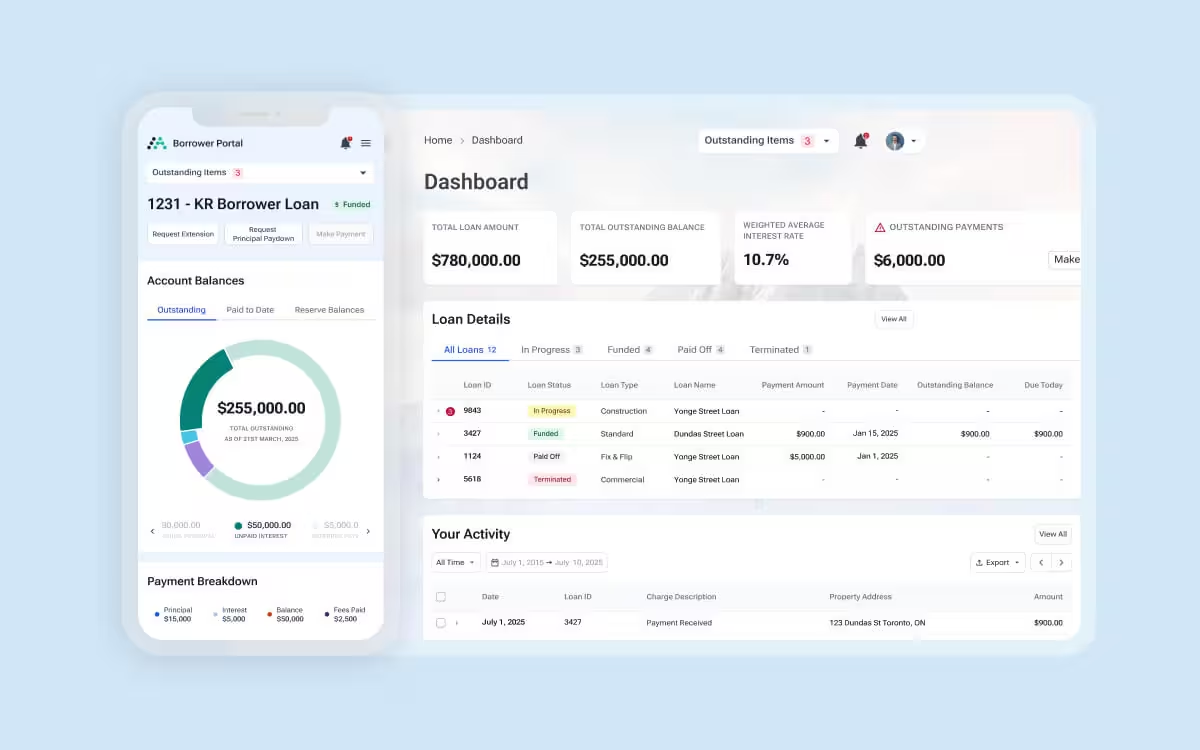
A borrower portal for loan repayments is a secure digital interface that gives borrowers direct access to loan information and repayment activity throughout the servicing process. Instead of relying on phone calls or email updates, borrowers can manage many routine servicing tasks directly through the portal.
Depending on the lending operation, borrowers can typically:
- View loan balances and payment history
- Track repayment schedules and upcoming due dates
- Access loan documents and servicing records
- Make payments or set up autopay
- Receive loan status updates and servicing notifications
Modern borrower portals are usually connected directly to the loan origination system (LOS) and servicing platform behind the scenes. That connection helps keep balances, payment activity, loan updates, and servicing workflows synchronized across both lender and borrower operations.
As a result, lenders gain a more centralized servicing process while borrowers receive more consistent access to real-time loan information throughout the repayment lifecycle.
Why Borrower Portals Are Essential for Modern Private Lenders
Borrower portals have become a more central part of modern lending operations because they affect both the borrower experience and the servicing process behind it. For private lenders, they help centralize repayment activity, reduce servicing friction, and create a more consistent repayment experience across the portfolio:
- Reduced Operational Workload
Borrower portals reduce the number of routine servicing requests that internal teams handle manually. Instead of responding to payment confirmations, balance inquiries, or document requests individually, lenders can centralize that information inside the portal.
- Improved Payment Reliability with Autopay
Autopay setup helps create more consistent repayment behavior by automating scheduled payments directly through the borrower portal. This reduces reliance on manual reminders and lowers the likelihood of missed payment dates.
- Real-Time Loan Transparency
Borrowers can access balances, repayment schedules, payment history, and loan status updates in real time. This visibility helps reduce confusion around repayment activity and keeps borrowers better informed throughout servicing.
- Faster Communication & Fewer Delays
Loan updates, servicing notices, and repayment information become available directly through the portal without requiring lender intervention for every request, which reduces communication delays and shortens response times across the servicing process.
- Stronger Borrower Trust & Retention
Borrowers tend to place more trust in lenders when repayment information and servicing activity are consistently accessible. Accenture’s 2025 Banking Consumer Study found that stronger digital lending experiences are closely tied to higher satisfaction and trust. Over longer lending relationships, that consistency can also help strengthen borrower retention and ongoing engagement.
- Scalable Loan Servicing
Servicing operations often become fragmented as portfolio volume increases, especially when repayment tracking and borrower communication depend heavily on manual workflows. Borrower portals help standardize those servicing processes across the portfolio, making repayment activity easier to manage at scale.
- Lower Risk of Missed Payments
Automated payment scheduling, reminders, and autopay workflows help reduce delinquency risk by keeping repayment activity more consistent. Borrowers are less likely to miss payment deadlines when payments are scheduled automatically and supported by reminders.
Autopay Setup: How It Works in Modern Lending
For lenders evaluating what to use for borrower portal and autopay setup, the goal is usually to reduce manual repayment coordination while keeping payment activity synchronized with servicing workflows.
Autopay setup allows borrowers to automate recurring loan payments directly through the borrower portal instead of relying on manual payment submissions each month. In most lending platforms, borrowers can securely link a bank account or payment card during the servicing process and authorize recurring repayment schedules based on the loan terms.
Once autopay is enabled, payments are processed automatically according to the agreed repayment frequency. Borrowers can typically review upcoming payment dates, update payment methods, or monitor completed transactions directly inside the portal without contacting the lender.
Modern lending systems also include failed payment handling workflows that can trigger retry attempts, repayment alerts, or servicing notifications when a payment fails to process. Automated notifications help borrowers stay aware of upcoming due dates, processed payments, and account changes throughout the repayment cycle.
On the servicing side, autopay workflows create more consistent repayment tracking while supporting compliance records and payment audit history inside the platform. For lenders, that consistency helps reduce missed payments, lower delinquency risk, and minimize manual repayment coordination across the portfolio.

What to Look for in a Borrower Portal Solution
Not all borrower portals handle servicing workflows the same way. For private lenders, the portal should function as part of the broader loan servicing software environment rather than as a standalone payment tool. The best borrower self-serve portals for loan repayments reduce servicing friction, keep repayment activity synchronized with the LOS, and give borrowers direct access to accurate loan information without increasing operational complexity.
Key features to look for include:
- White-label branding capability so the portal matches the lender’s brand and borrower experience
- Secure authentication and 2FA to protect borrower accounts and repayment activity
- Real-time loan syncing with the LOS to keep balances, payment status, and servicing updates accurate
- Flexible autopay configuration that supports different repayment schedules and loan structures
- Mobile responsiveness so borrowers can manage payments and loan activity across devices
- Payment gateway integrations for automated payment processing and transaction management
- Audit logs and compliance tracking to maintain payment records and servicing visibility across the portfolio
For lenders evaluating white-label borrower portal options for lenders in Canada, repayment visibility, LOS synchronization, and autopay flexibility have become increasingly important as servicing operations grow more complex.
Use Cases in Private Lending Operations
Repayment coordination looks different across residential lending, commercial servicing, bridge loans, and high-volume portfolios. Borrower portals help private lenders create a more standardized servicing experience across those different lending environments while reducing reliance on manual follow-ups and payment coordination.
In residential private lending, borrower portals simplify routine servicing by giving borrowers direct access to balances, payment schedules, loan documents, and autopay tools throughout repayment.
For commercial mortgage servicing, portals help manage more complex loan structures, ongoing documentation requirements, and repayment activity tied to larger commercial deals.
Bridge loans create a different servicing challenge because repayment timelines are often shorter and more time-sensitive. Borrower portals help keep payment activity, loan updates, and repayment schedules visible throughout the servicing cycle without requiring constant lender intervention.
In high-volume portfolio servicing environments, those same workflows become easier to manage consistently across large numbers of active loans. Borrower portals help standardize repayment processes across different loan products while giving borrowers a more predictable servicing experience overall.
The Bottom Line
Borrower portals and autopay workflows are becoming a standard part of modern private lending operations, rather than just an added servicing feature. As repayment activity becomes more digital, borrowers increasingly expect direct access to balances, payment schedules, loan updates, and automated payment tools throughout the servicing process.
For lenders, this changes how repayment coordination is managed across the portfolio. More servicing activity can now happen directly inside the borrower portal itself instead of through manual follow-ups, payment reminders, and routine status requests.
Mortgage Automator helps private lenders centralize those workflows inside a single servicing environment while supporting a more connected mortgage workflow with borrower portal and status updates built directly into the repayment process.
If your current servicing process still depends heavily on emails, payment reminders, and manual follow-ups, book a demo to see how Mortgage Automator can help modernize your borrower servicing workflows.
Frequently Asked Questions
What is a borrower portal in private lending?
A borrower portal is a secure digital interface that gives borrowers direct access to loan information, repayment activity, payment schedules, documents, and servicing updates throughout the loan lifecycle.
What is a borrower portal for loan repayment used for?
A borrower portal for loan repayment allows borrowers to manage repayment activity without relying heavily on manual lender communication. Borrowers can typically review balances, track upcoming payments, access loan documents, make payments, and set up autopay directly through the portal.
How does autopay setup work in lending portals?
Autopay setup usually involves linking a bank account or payment card through the borrower portal and authorizing recurring payments based on the loan terms. Payments are then processed automatically according to the repayment schedule configured inside the servicing platform.
Why is autopay important for private lenders?
Autopay helps create more consistent repayment activity by reducing reliance on manual payment submissions and reminders. It can also help lower delinquency risk while reducing the amount of servicing coordination required from internal teams.
What features should a modern borrower portal include?
Modern borrower portals should include secure authentication, real-time loan syncing, autopay configuration, payment tracking, mobile responsiveness, document access, and compliance tracking capabilities.
How do borrower portals improve mortgage workflows?
Borrower portals help reduce manual servicing tasks by centralizing payment activity, loan updates, borrower communication, and repayment tracking inside a single servicing workflow.
Can borrower portals integrate with LOS systems like Mortgage Automator?
Yes. Tools like Mortgage Automator are designed to connect borrower portals directly with loan origination and servicing workflows so payment activity, balances, repayment schedules, and loan updates remain synchronized across the platform.