Every lender wants the same thing from origination: move qualified loans to funding faster without weakening the review behind the decision. That is harder than it sounds. Each file has to carry borrower information, documents, risk checks, approvals, conditions, compliance steps, and communication through the right sequence before the lender can stand behind the loan.
A weak loan origination process makes speed risky. The faster files move, the easier it becomes to miss documents, duplicate data entry, lose track of conditions, or leave an approval sitting with the wrong person. A structured, automated process gives lenders more control over the same work, so the team can move loans forward without rebuilding the file by hand at every stage.
This article breaks down the stages of the loan origination process, where delays usually happen, and how lenders can make the workflow easier to manage without losing oversight.
What Is the Loan Origination Process?
The loan origination process is the workflow lenders use to receive, review, approve, document, close, and fund a loan. It begins when a borrower or broker submits information and continues through underwriting, conditions, signatures, funding, and the first servicing handoff.
The purpose is to help the lender make a decision supported by borrower details, collateral, loan purpose, repayment ability, documents, risk factors, and closing conditions.
Mortgage, commercial, private, bridge, construction, and other loans all follow origination workflows. The details vary, but the core stages remain similar: collect information, verify it, assess risk, approve the file, prepare documents, and fund the loan.
Modern loan origination tools support this by connecting digital applications, pipeline stages, documents, approvals, borrower communication, reporting, and automation in one operating flow.
The 4 Stages of the Loan Origination Process
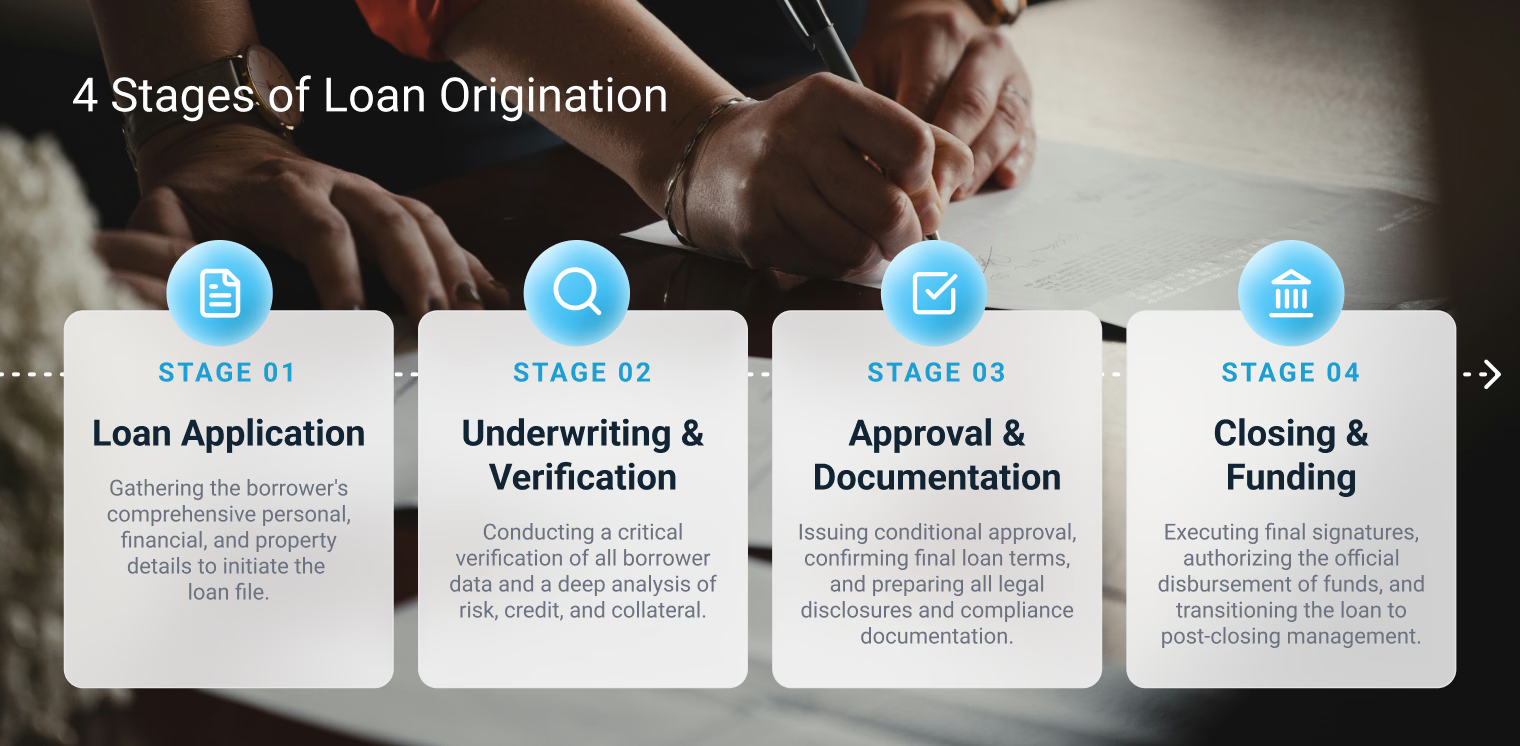
The 4 stages of the loan origination process can be grouped into application, underwriting and verification, approval and documentation, and closing and funding. Some lenders add more internal stages, but most files move through this same basic progression.
Stage 1: Loan Application
The lender collects borrower information, loan amount, property details, income or business financials, loan purpose, and initial documents. Digital applications make this stage less dependent on email by giving borrowers and brokers a structured way to submit the information the team needs.
Stage 2: Underwriting and Verification
Underwriting tests the file. Depending on the loan type, that may include income verification, asset verification, credit review, collateral evaluation, title review, business financial analysis, or risk scoring. Automated tools can support repeatable checks, while underwriters focus on the decisions that need judgment.
Stage 3: Approval and Documentation
Once underwriting is complete, the lender may issue conditional approval, request final items, confirm loan terms, prepare disclosures, and complete compliance checks. This is where missing documents, outdated information, or unclear task ownership can slow the file down.
Stage 4: Closing and Funding
Closing and funding include final signatures, document execution, funding authorization, record keeping, and post-closing handoff. Automation reduces delays throughout the loan origination process by routing tasks, triggering reminders, organizing documents, and keeping updates tied to the loan.
Commercial Loan Origination Process vs Residential Lending
The commercial loan origination process usually carries more variation than standard residential lending. Commercial loans often involve larger loan values, business borrowers, entity structures, rent rolls, operating statements, tax returns, appraisals, guarantors, and collateral that requires deeper review.
Residential lending often follows a more familiar path around borrower income, credit, property value, disclosures, and standard documentation. Commercial lending, on the other hand, depends more heavily on business performance, asset income, tenant risk, market conditions, guarantor strength, and internal credit policy.
The approval timeline can also be longer. A commercial file may need input from underwriting, credit, legal, valuation, construction, asset management, and senior decision-makers. If those reviews happen through email or static checklists, the file can sit while the team waits.
The issue is not only that commercial files require more review; it is that each review can create another handoff, another document request, or another condition that has to be tracked before the loan can move forward. Automation helps lenders keep those steps tied to the file, so commercial and residential teams can manage the loan origination process flow with fewer stalled handoffs.

Common Challenges During the Loan Origination Process
Most delays in the loan origination process come from routine work that is easy to overlook until the pipeline gets busy. The most common issues include:
- Manual data entry: Teams may need to copy borrower details, loan terms, property information, and conditions between systems. That adds time and increases the chance of mistakes.
- Missing documentation: Underwriters cannot move quickly when income records, appraisals, entity documents, disclosures, or supporting files are incomplete or hard to find.
- Slow approvals: Files can sit when review steps are unclear, approval authority is not defined, or the next task depends on someone manually checking status.
- Poor communication: Borrowers, brokers, and internal teams may all be waiting on different updates. Without a shared view of the file, follow-up becomes repetitive.
- Disconnected systems: Applications, documents, emails, underwriting notes, and pipeline updates often live in separate places, forcing teams to rebuild the file before they can act.
- Compliance pressure: Required checks, disclosures, audit trails, and documentation standards are harder to manage when compliance steps sit outside the workflow.
- Human error: Manual updates can lead to duplicate entries, missed conditions, outdated notes, or incorrect file status.
- Operational bottlenecks: When too much work depends on individual follow-up, the pipeline slows down even when the loan itself is qualified.
Inefficient origination workflows affect both sides of the relationship. Borrowers wait longer for answers, while lending teams spend more time chasing information instead of moving files toward approval and funding.
How Loan Origination Automation Improves Efficiency
Loan origination process automation helps lenders reduce the manual work around each file without removing the judgment required to make a sound lending decision. The impact can be significant: automation can help lenders close loans 60% faster by automating application processing and document collection.
The biggest improvements usually come from:
- Digital applications: Borrowers and brokers can submit information through a structured intake path, giving the lending team a stronger starting point than scattered emails or incomplete forms.
- Automated workflows: Tasks, approvals, reminders, document requests, and status changes can move through defined steps instead of depending on someone to trigger each action manually.
- Centralized document management: Applications, income records, entity documents, appraisals, disclosures, approvals, and signed files stay tied to the loan record, making review work faster.
- Faster approvals: When the system shows what is missing, what has been reviewed, and who owns the next task, files are less likely to stall between stages.
- Reduced manual work: Automation can handle repetitive updates, reminders, routing, and status tracking, giving loan officers, processors, and underwriters more time for actual review.
- Better borrower communication: Borrowers can receive document requests, status updates, and next-step reminders without every message becoming another manual follow-up.
- Audit trails: The system can preserve a record of task activity, document updates, approvals, conditions, and communication, which helps teams support internal reviews.
- Improved compliance: Compliance checks can be built into the workflow, reducing the risk that required steps are missed or handled too late in the loan origination process.
Taken across the full workflow, loan processing automation can cut turnaround time by up to 80%. The biggest gains usually come from removing the repeated handoffs around intake, document collection, approval routing, borrower follow-up, and status tracking.
Mortgage Automator’s automation tool helps lenders route tasks, manage document requests, track approvals, and keep loan activity moving from application to funding.

How Long Does the Loan Origination Process Take?
There is no single answer to how long the loan origination process takes because timing depends on the lender, borrower, loan type, documentation quality, and review requirements. As a useful benchmark, the average purchase loan closed in 36.8 days in March 2026, down from 37.3 days one year earlier. Across all origination types, the average closing time was 38.2 days.
Those averages do not tell the full story for every lender. A file with a complete application, a responsive borrower, straightforward collateral, and standard terms can move quickly. A file with missing documents, complex income, multiple guarantors, construction details, business financials, title issues, or layered approvals will usually take longer.
Underwriting speed matters, but it is only one part of the timeline. Many delays happen before and after underwriting: intake gaps, document collection, appraisal timing, borrower questions, compliance review, approval conditions, signature delays, and funding preparation.
Automation can shorten the parts of the loan origination process that lenders control. It can help collect documents earlier, route tasks faster, remind borrowers sooner, and show managers where the pipeline is stuck. Manual workflows stretch timelines because every handoff depends on someone checking, asking, or updating the file by hand.
Best Practices for Streamlining Loan Origination Process Steps
Improving the loan origination process starts with making routine work easier to repeat while still leaving room for exceptions. Lenders do not need every file to follow the exact same path, but the team does need a process that makes the next step obvious.
- Standardize the main workflow stages: Define the major steps each file moves through, from intake and document collection to underwriting, approval, closing, and funding.
- Set document requirements by loan type: A commercial loan, construction loan, residential mortgage, or private lending file may each require different materials. Teams should know what is required before the file reaches review.
- Define approval paths early: Approval authority, review steps, and conditions should be tied to the file instead of handled through side conversations or informal reminders.
- Collect documents digitally: Borrowers and brokers need a direct way to submit required materials, and the lending team needs those documents attached to the loan record.
- Route tasks automatically: Task routing helps prevent work from sitting with the wrong person or waiting for someone to manually assign the next step.
- Use borrower self-service portals: Portals can reduce routine questions by showing borrowers what has been requested, what has been submitted, and what still needs attention.
- Build compliance checks into the workflow: Required reviews, disclosures, and documentation steps should happen as part of the process rather than becoming a last-minute scramble near closing.
- Track status in real time: Managers need to see where files are moving, where they are stalled, and which bottlenecks are affecting the loan origination process.
- Review workflow reports regularly: Reporting helps lenders spot repeat delays, overloaded team members, and process gaps that need adjustment.
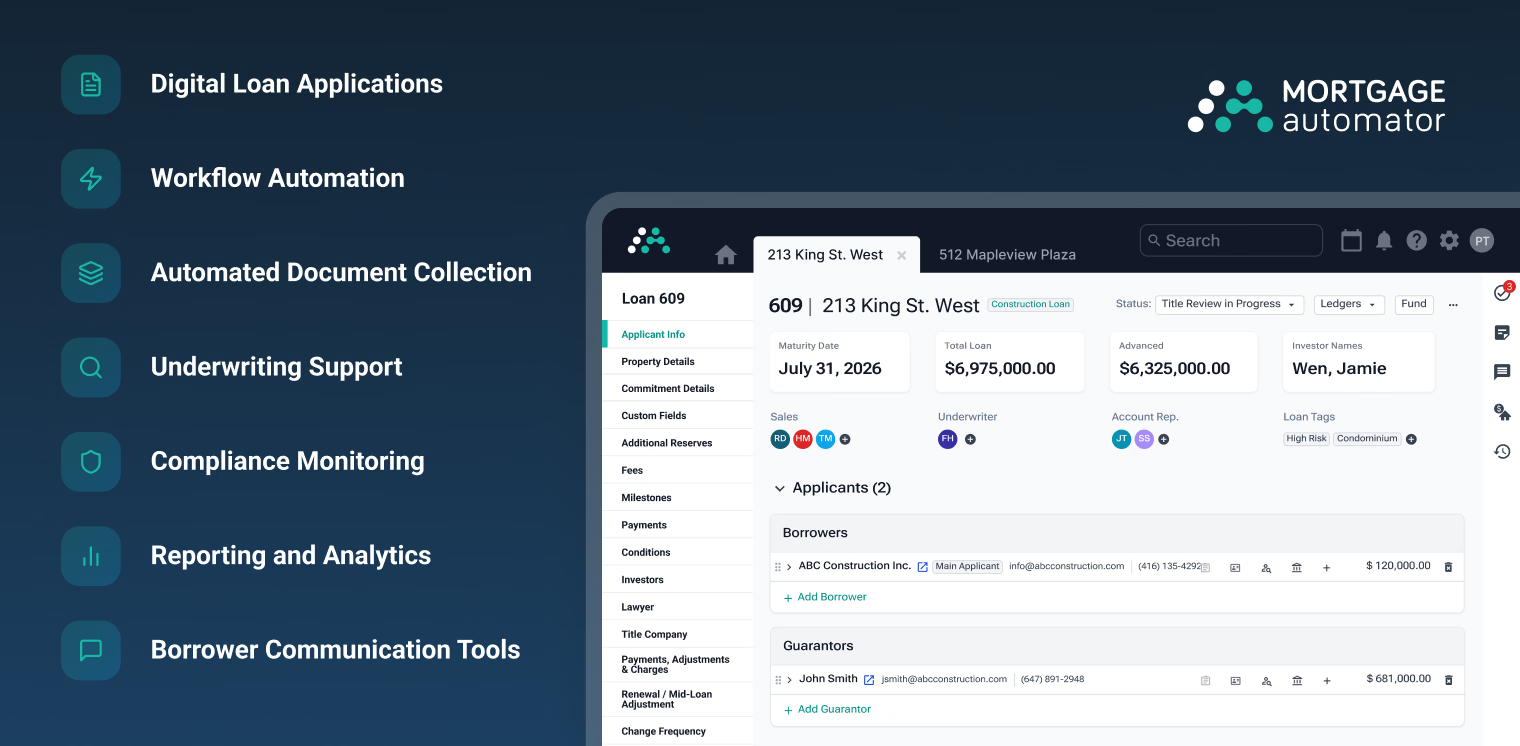
Features to Look for in Loan Origination Software
The right platform should support the full loan origination process from application to funding. Lenders should look for features that reduce manual coordination and give teams better control over files in motion.
Digital Loan Applications
Digital applications help borrowers submit key information and documents in one place, reducing missing fields and unstructured email submissions.
Workflow Automation
Workflow automation moves tasks, approvals, reminders, document requests, and borrower updates through a defined process.
Automated Document Collection
Document collection tools help lenders request, receive, organize, and review income records, entity paperwork, appraisals, disclosures, or construction details.
Underwriting Support
Underwriting support usually includes configurable fields, risk checks, condition tracking, credit review steps, and approval workflows.
Compliance Monitoring
Compliance monitoring helps teams standardize required steps, maintain documentation, and keep review records tied to the loan.
Reporting and Analytics
Reporting helps managers track volume, cycle times, stalled files, team workload, approvals, and funding forecasts across the entire loan origination process.
Borrower Communication Tools
Borrower communication tools support status updates, reminders, document requests, and file-level messages.
Choosing the Right Loan Origination Platform
Choosing a platform is a decision about how the lending operation should run as volume grows. The real test is whether it can support the lender’s products, workflow changes, integrations, compliance needs, and team habits after implementation.
Scalability matters because a process that works for ten files can break when the team is managing a hundred. Custom workflows matter because lenders often need different stages, fields, documents, and approval paths by loan type.
Ease of implementation deserves attention, too. If every change requires outside development, the team may end up waiting on the software instead of using it to move faster. The platform should also connect with CRM tools, document systems, e-signatures, servicing platforms, and reporting environments.
The right platform helps teams follow required steps, keep records, and work efficiently without creating unnecessary friction for borrowers or staff.
Final Thoughts
A weak loan origination process does not fail all at once. It shows up as missing documents, repeated borrower questions, delayed approvals, and managers trying to read pipeline status from too many places.
Automation helps remove that drag from application to funding. Digital intake, task routing, document management, borrower updates, audit trails, and reporting give lenders a process that can handle more loans without adding more manual recovery.
Frequently Asked Questions
What is the loan origination process?
The loan origination process is the path from application to funding. It includes borrower intake, document collection, underwriting, approval, closing, and record keeping.
What are the 4 stages of the loan origination process?
The 4 stages of the loan origination process include loan application, underwriting and verification, approval and documentation, and closing and funding.
What documents are required during loan origination?
Common documents include identification, income records, bank statements, tax returns, business financials, entity documents, collateral information, appraisals, disclosures, and signed agreements.
How long does the loan origination process take?
This depends on loan complexity, borrower responsiveness, documentation quality, underwriting speed, appraisal timing, approvals, and automation.
What is the commercial loan origination process?
The commercial loan origination process is the workflow lenders use to review business borrowers, collateral, financials, guarantors, risk, documentation, approvals, closing, and funding.
How can lenders speed up the loan origination process?
Lenders can speed up the loan origination process with digital applications, automated document requests, task routing, borrower portals, status tracking, compliance checks, and reporting.
What software is used for loan origination?
Lenders can use loan origination software to manage applications, documents, underwriting, approvals, borrower communication, reporting, and funding preparation.
How does automation improve loan origination?
Loan origination process automation reduces manual entry, routes tasks, triggers reminders, organizes documents, tracks approvals, supports compliance records, and keeps borrowers updated.