Introduction
As private lending grows in North America, the volume of sensitive borrower and investor data handled by lenders continues to rise. With increasing cyber threats and tighter regulations, protecting that data is no longer just good practice. It has become a necessity.
In 2025, private lenders face challenges such as AI-driven attacks, strict compliance requirements, and the need to maintain borrower trust in a highly competitive market. This guide provides practical steps to help you safeguard your data, stay compliant, and protect your reputation.
1. Stay Ahead of North American Regulations
Data security regulations in North America have become more comprehensive and focused on financial institutions, including private lenders. Understanding these rules is essential for avoiding penalties and operational disruptions.
United States
U.S. regulators are stepping up efforts to combat cybersecurity threats. The New York Department of Financial Services (NYDFS) now requires annual cybersecurity training that specifically addresses AI-related threats. There is also a growing emphasis on breach reporting and accountability for third-party vendors.
Security experts recommend replacing traditional passwords with passkeys and using multi-factor authentication to reduce the risk of stolen credentials, according to TechRadar’s 2025 cybersecurity report.
Canada
In Canada, updates to privacy laws such as PIPEDA (Personal Information Protection and Electronic Documents Act) are driving private lenders to strengthen their data governance practices and breach response procedures. Canadian regulators are increasingly aligning with international standards, making frameworks like ISO/IEC 27001 and the NIST Cybersecurity Framework valuable references for building strong security processes. These frameworks provide clear guidance for identifying, mitigating, and monitoring cybersecurity risks.
Canadian regulators expect private lenders to demonstrate that they have effective systems in place to manage threats and report incidents promptly. Taking a proactive approach to compliance not only helps reduce legal and financial risks but also builds trust with borrowers and investors by showing a strong commitment to safeguarding sensitive data.
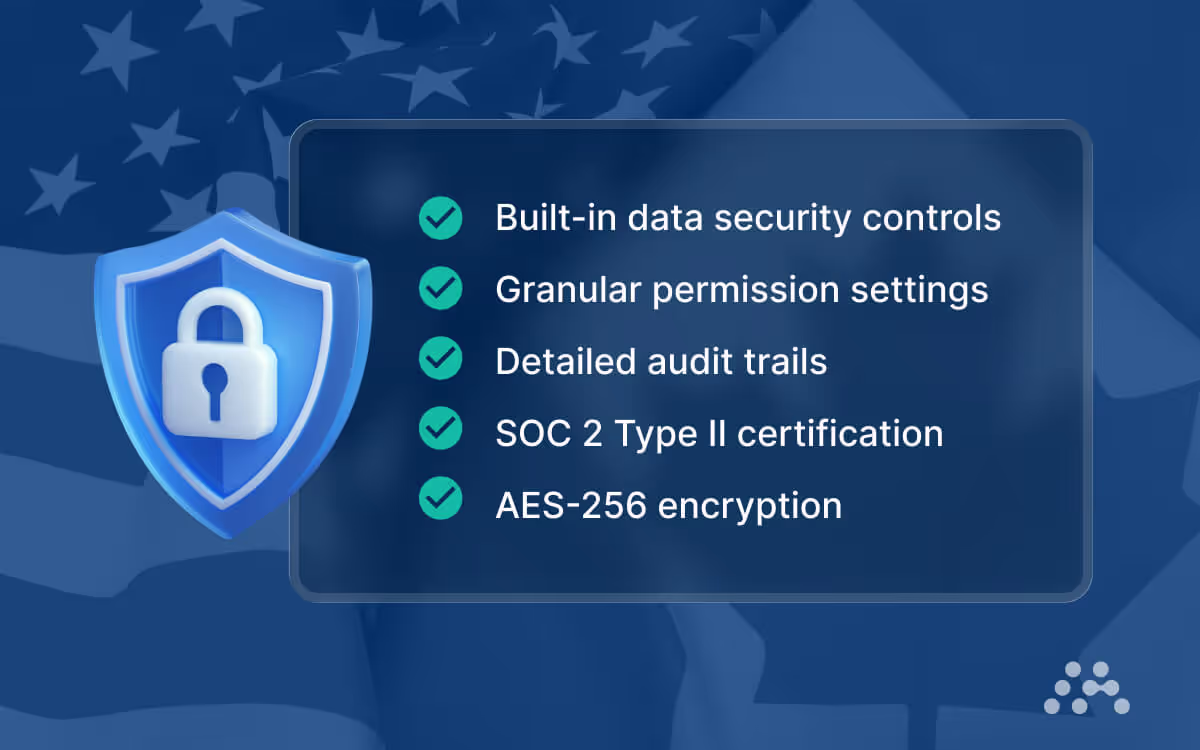
Mortgage Automator is designed to support lenders in meeting evolving regulatory expectations without adding unnecessary complexity to their operations. By offering built-in data security controls, granular permission settings, and detailed audit trails, Mortgage Automator helps lenders demonstrate accountability and protect sensitive borrower and investor information.
With SOC 2 Type II certification and AES-256 encryption in place, the platform provides a secure foundation for compliance, while also streamlining workflows and reporting. This allows private lenders to focus on growth and client relationships, knowing that their technology partner is committed to maintaining strong safeguards and keeping up with industry best practices.
2. Adopt a Zero Trust Security Model
A Zero Trust security model is one of the most effective ways to protect sensitive data. This model is based on the principle of never assuming access is safe without verification.
For private lending businesses, this includes:
- Enabling multi-factor authentication (MFA) for every user, including employees and vendors
- Implementing role-based access controls so staff only see the information required for their role
- Monitoring all network activity to detect suspicious behavior
- Maintaining detailed access logs to support audits and investigations
According to TechRadar, Zero Trust is particularly important for lenders with hybrid or remote teams where there are multiple access points. Continuous verification significantly reduces the risk of unauthorized access.
3. Partnering with a Secure, Compliant Vendor
When choosing a third-party platform, security and compliance are critical. Mortgage Automator is built with bank-grade safeguards to ensure that your borrowers’, investors’, and company data are always protected.
Here’s how Mortgage Automator keeps your organization secure:
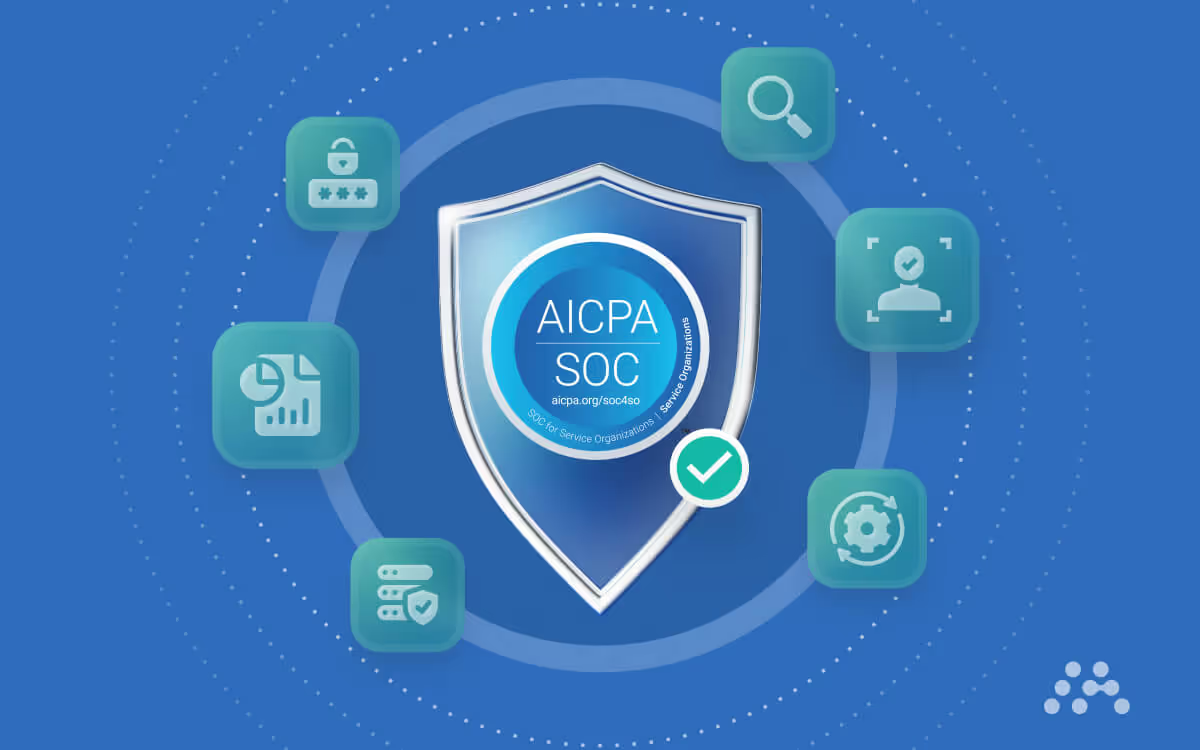
- SOC 2 Type II Certification: Independent audits verify that Mortgage Automator meets the highest standards for data security and privacy.
- AES-256 Encryption: All data is encrypted at rest and in transit, providing strong protection against breaches.
- Role-Based Permissions: Granular access controls ensure that team members and external stakeholders only see the data they need.
- Audit Trails & Monitoring: Every action in the system is tracked, giving you complete visibility for compliance and reporting.
- Continuous Updates & Improvements: Our team regularly enhances security protocols to stay ahead of emerging threats.
By partnering with a secure and compliant platform like Mortgage Automator, you not only protect sensitive information but also meet the expectations of regulators and investors, without adding extra overhead to your team.
4. Build a Security-First Culture Through Training
Even the most advanced cybersecurity tools cannot prevent breaches caused by human error. Employees must be trained to recognize and respond to threats.
Effective training programs should include:
- How to spot phishing scams and AI-generated social engineering attacks
- Best practices for handling borrower and investor data securely
- Steps to report suspicious activity immediately
- Regular simulated phishing campaigns and cybersecurity drills
Regulators are placing a stronger emphasis on cybersecurity education, with many requiring ongoing training for financial institutions. This reflects the growing importance of awareness and preparedness in preventing modern cyber threats.
5. Prepare for Emerging Threats
AI-Powered Attacks
Cybercriminals are increasingly leveraging artificial intelligence to launch more sophisticated and targeted cyberattacks. AI makes it easier to create highly convincing phishing emails, deepfake audio and video, and automated malware that adapts to security defenses in real time. These attacks are not only faster but also more difficult to detect using traditional methods.
To stay ahead, organizations need to implement multi-layered defenses that combine advanced detection tools, behavioral analytics, and continuous staff education. Regular simulated phishing exercises can help employees recognize deceptive messages, while AI-driven threat detection platforms can identify unusual activity patterns before damage occurs.
For private lenders, the stakes are especially high because they handle sensitive borrower and investor data every day. This is where Mortgage Automator provides peace of mind. Our platform is designed with built-in security features, including data encryption, secure user authentication, and detailed audit trails to help protect against unauthorized access. By automating workflows and centralizing information, you reduce the need for manual data handling, which lowers the risk of human error that AI-driven attackers often exploit.
.avif)
Conclusion
For private lenders in North America, data security is essential to maintaining trust and ensuring business continuity. As cyber threats evolve and regulations become stricter, lenders must stay ahead by adopting modern frameworks, training their teams, and closely managing vendors.
By taking a proactive, layered approach, you can protect sensitive borrower and investor data while positioning your business for long-term success.
Mortgage Automator provides the tools and support you need to keep your lending operations secure and compliant, giving you peace of mind. Schedule a demo today to see how our platform can help you streamline processes while safeguarding your most valuable data.