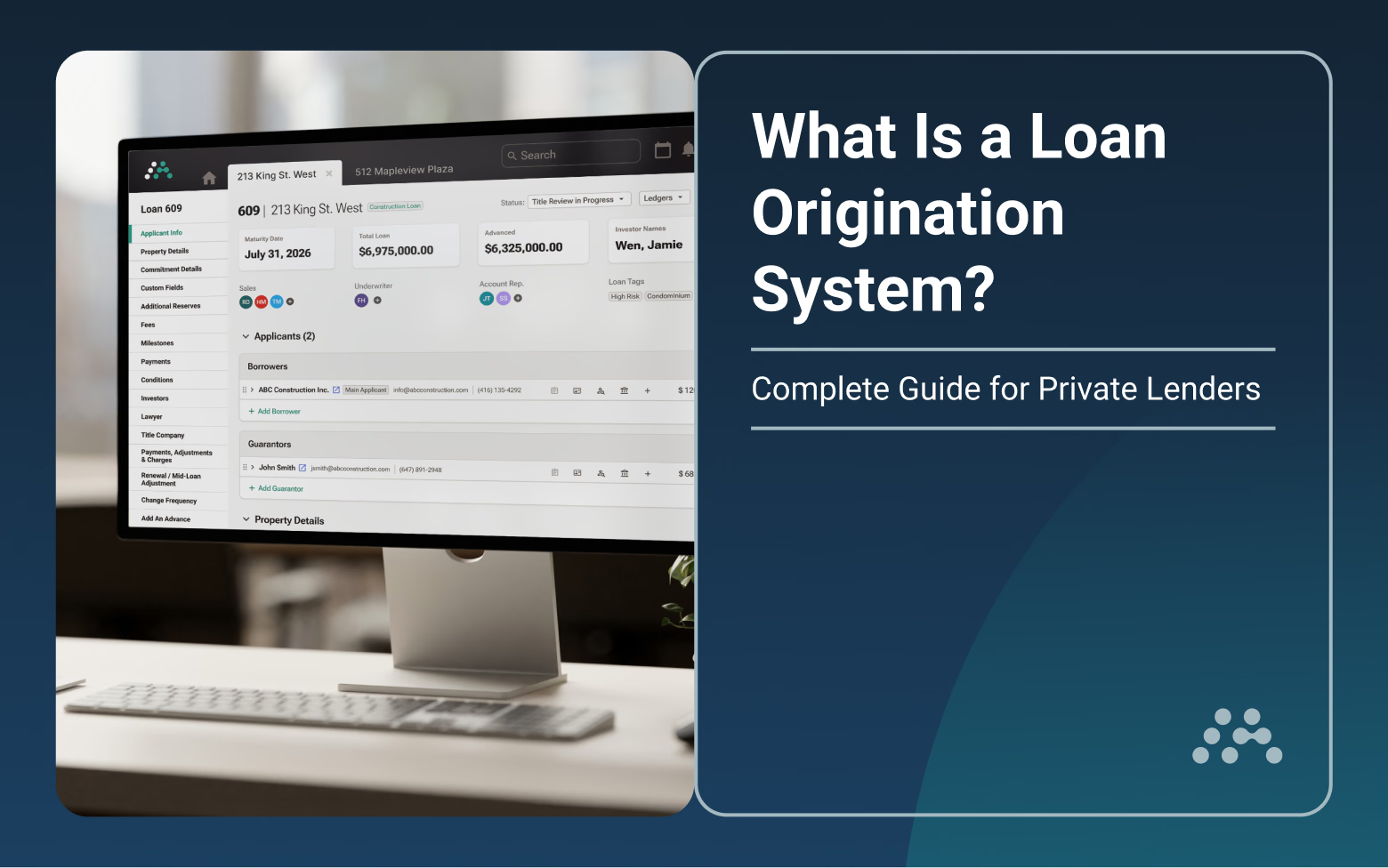
Investor accounting can become one of the hardest parts of private lending to manage manually. Payments need to be applied correctly, investor splits need to match participation terms, trust account activity needs to reconcile, and distribution records need to stand up to review.
For teams managing private lending trust accounting and investor payout management, the risk is not only a missed formula or a late report. It is the gradual loss of confidence in records that sit across separate files, bank exports, email threads, and manually prepared statements.
Loan servicing software for private lenders gives teams a more controlled way to manage accounting activity, reconciliations, payouts, and investor reporting without depending on spreadsheets for every review, adjustment, and payout cycle.
Why Spreadsheets Become a Bottleneck for Private Lending Operations
Spreadsheets are common in private lending because they are familiar, flexible, and easy to start with. For a small portfolio, they may be enough to track payments, investor shares, balances, and basic reporting. The problem is that servicing work becomes harder to manage as loan volume grows, investor structures become more complex, and more people need access to the same financial records.
The most common limitations include:
- Manual calculations: Interest accruals, principal payments, servicing fees, escrow activity, and investor allocations often depend on formulas that need regular review. One broken formula or outdated input can affect multiple records.
- Version control issues: When accounting files are shared by email or copied across folders, it becomes difficult to know which version is current. Teams may end up working from different numbers, especially during reconciliation or investor reporting periods.
- Limited audit visibility: Spreadsheets rarely provide a clear history of who changed a record, when it changed, and why. That makes it harder to review past activity, investigate discrepancies, or support internal controls.
- Time-consuming reconciliations: Matching borrower payments, trust account activity, lender payouts, and investor distributions can take hours when the data sits across separate files and bank records.
- Higher error risk as portfolios grow: A process that works for a handful of loans can become fragile once the portfolio includes more borrowers, more investors, and more payment scenarios.
Spreadsheets can support early servicing work, but they rarely hold up under complex accounting, investor allocations, and reconciliation demands. Loan servicing software for private lenders gives teams a more reliable foundation for that work.
Understanding Trust Accounting in Private Lending
Trust accounting is the process of tracking and managing funds a lender holds or administers on behalf of other parties. In private lending, that can include borrower payments, escrow funds, investor capital, interest distributions, servicing fees, and other loan-level transaction activity.
Private credit growth has raised the operational bar for lenders managing investor capital. Morgan Stanley reported that the private credit market was about $3 trillion at the start of 2025, up from about $2 trillion in 2020, with projections of roughly $5 trillion by 2029. As lending operations handle more investor money, spreadsheet-level tracking becomes harder to defend during reconciliations, reporting cycles, and payout reviews.
Segregation of funds is a core part of private lending trust accounting. Lenders need to distinguish operating funds from trust funds, investor funds, escrow balances, and other loan-related accounts. Borrower payments must be applied correctly, investor distributions need to match ownership or participation terms, and each transaction should be traceable back to the loan record.
For individual lenders, accurate trust accounting supports servicing, reconciliation, investor communication, and audit readiness. It also gives teams a clearer view of each loan’s financial activity without relying on scattered spreadsheets or manual account checks.
Common Challenges with Investor Payouts and Fund Accounting
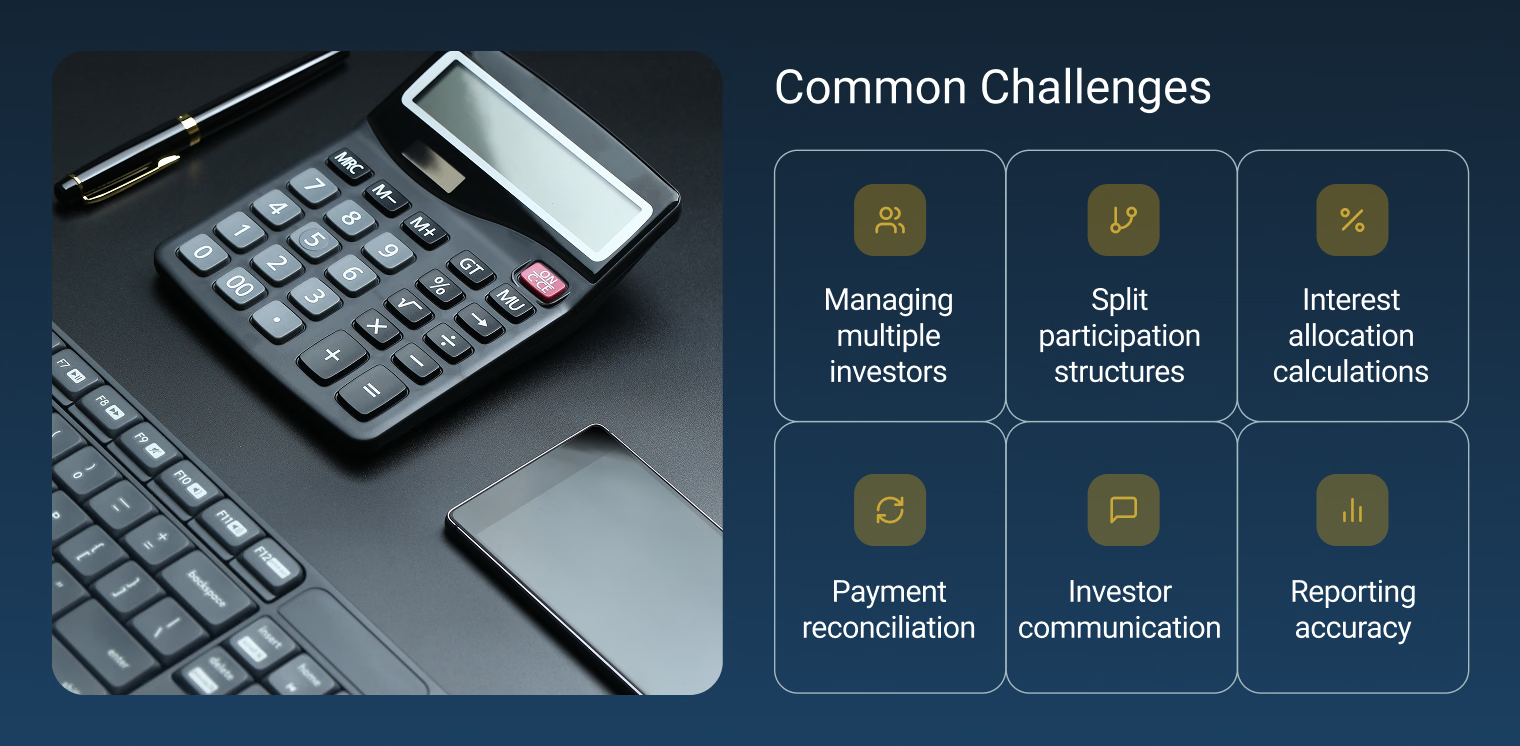
Investor payout management becomes more difficult as private lenders add more loans, more investors, and more participation structures.
The biggest challenges usually include:
- Managing multiple investors: A single loan may involve one investor, several investors, or a broader pool of capital. Each investor may have different ownership terms, payout schedules, and reporting expectations.
- Split participation structures: When investors participate in different portions of a loan, payouts need to reflect the exact structure of the deal. Small calculation errors can create discrepancies across interest, principal, and fee distributions.
- Interest allocation calculations: Private lending portfolios often include different rates, payment frequencies, accrual methods, and loan terms. Calculating investor interest manually increases the chance of missed adjustments or inconsistent records.
- Payment reconciliation: Borrower payments need to be matched against loan balances, trust account activity, investor shares, and distribution records. When that information sits in separate files, reconciliation takes longer and is harder to verify.
- Investor communication: Investors expect timely statements, payment histories, distribution details, and portfolio updates. Manual reporting can slow those updates down and create more follow-up questions.
- Reporting accuracy: Fund accounting depends on clean, consistent data. As the portfolio grows, lenders need reporting that reflects current loan activity, payout history, and investor positions without rebuilding reports by hand.
These challenges rarely appear all at once. They build as more capital, more payments, and more exceptions move through the servicing process.
What Software to Use for Trust Accounting in Private Lending
Private lenders evaluating what software to use for trust accounting in private lending should look for a platform built around loan servicing, investor accounting, and portfolio reporting rather than a general accounting tool alone.
Useful features include:
- Purpose-built loan servicing functionality: The system should support the full servicing lifecycle, including payment tracking, loan balances, escrow activity, fees, statements, and borrower communication.
- Automated accounting workflows: Accounting activity should be updated from loan and payment events rather than relying on manual spreadsheet entries.
- Investor management tools: Investor records should connect directly to loan activity, so ownership terms, distribution schedules, and payout history stay tied to the servicing record.
- Transaction tracking: Every payment, allocation, adjustment, fee, and payout should be connected to the relevant loan record so teams can review activity without searching through disconnected files.
- Reporting capabilities: The software should make it easier to produce investor statements, distribution reports, reconciliation summaries, payment histories, and portfolio-level reporting.
- Audit-ready recordkeeping: Private lenders should be able to see what changed, when it changed, and how a transaction moved through the servicing process.
For most growing lending teams, loan servicing software for private lenders is the better fit because it connects trust accounting to the servicing activity that creates the accounting work in the first place.

How Loan Servicing Software Automates Trust Accounting
Trust accounting becomes easier to manage when payment activity, investor allocations, escrow records, and reporting all work from the same servicing data. Instead of updating spreadsheets after each transaction, lenders can use loan servicing software to record activity as it happens and keep accounting workflows tied to the loan record.
Automated Payment Tracking
Automated payment tracking helps lenders record borrower payments, apply them to the correct loan, and update balances without manual entry across multiple files. Payments can be tracked against principal, interest, fees, escrow, and other loan-level categories, giving servicing teams a clearer view of account activity.
This reduces the risk of missed updates and makes it easier to confirm whether a payment has been received, posted, allocated, or flagged for review.
Escrow and Trust Account Management
Trust and escrow activity needs to be separated from operating funds and tracked with care. Loan servicing software for private lenders can help teams monitor escrow balances, trust account transactions, investor funds, disbursements, and related account activity in one servicing environment.
That structure makes it easier to review what funds are being held, where they belong, and how they connect to each loan.
Transaction Reconciliation
Reconciliation is one of the most time-consuming parts of manual servicing. Software can help match borrower payments, bank activity, loan balances, investor allocations, and payout records without forcing teams to compare separate spreadsheets line by line.
When exceptions occur, servicing teams can investigate them more quickly because the transaction history is linked to the loan and account records.
Audit Trails and Recordkeeping
Trust accounting depends on a clear record of activity. Audit trails show when payments were recorded, when adjustments were made, who made changes, and how transactions moved through the servicing workflow.
That visibility supports internal reviews, accounting checks, investor questions, and compliance-related documentation.
Financial Reporting
Automated reporting helps lenders produce payment histories, escrow summaries, investor statements, reconciliation reports, and portfolio-level financial reports with less manual preparation.
For private lenders managing growing portfolios, this improves both efficiency and accuracy. Teams spend less time rebuilding reports from spreadsheet data and more time reviewing the financial activity that needs attention.
Tools to Reconcile Lender Payouts and Investor Splits
Private lenders looking for tools to reconcile lender payouts and investor splits need software that can compare payout records against the loan activity behind them. Borrower payments, investor shares, servicing fees, trust account records, and payout schedules all need to line up before distributions are finalized.
At a minimum, those tools should help teams:
- Compare borrower payments against expected principal, interest, fees, and escrow activity
- Confirm investor distributions against the participation structure before payouts are approved
- Flag mismatches between payment records, trust account activity, and investor statements
- Review adjustments, reversals, late payments, or partial payments before they affect reporting
- Maintain a clear record of what was reviewed, corrected, and approved
The result is a shorter payout review with fewer manual checks and clearer distribution records.
Automating Investor Reporting for Mortgage Portfolios
Automating investor reporting for mortgage portfolios helps lenders give investors clearer access to portfolio activity without rebuilding statements and reports by hand. With loan automation, payment data, distribution records, and portfolio performance details can feed directly into investor reporting workflows.
For lenders, automated reporting can support:
- Portfolio performance reporting: Investors can see how loans are performing across balances, payments, maturity dates, and portfolio-level activity.
- Investor statements: Statements can reflect current loan activity, payout history, interest earned, and relevant account details without manual report assembly.
- Distribution reporting: Lenders can show how payments were allocated and distributed across investors, loans, or funds.
- Payment histories: Investors can review past payments, distributions, and adjustments with a clearer record behind each entry.
- Real-time portfolio visibility: Teams and investors can work from more current information instead of waiting for month-end spreadsheet updates.
- Investor self-service access: Portals can reduce routine investor questions by giving investors direct access to statements, documents, payment histories, and portfolio updates.
For lenders, this reduces reporting workload and follow-up. For investors, it creates a more transparent view of portfolio activity and distributions.
Key Features to Look for in Loan Servicing Software for Private Lenders
When evaluating loan servicing software for private lenders, the most important features are the ones that reduce manual accounting work while keeping servicing, investor, and borrower records connected.
Trust Accounting Tools
Trust accounting tools help lenders separate and track borrower payments, escrow balances, investor funds, servicing fees, and disbursements. This gives teams a clearer record of where funds sit and how they move through the servicing process.
Investor Management
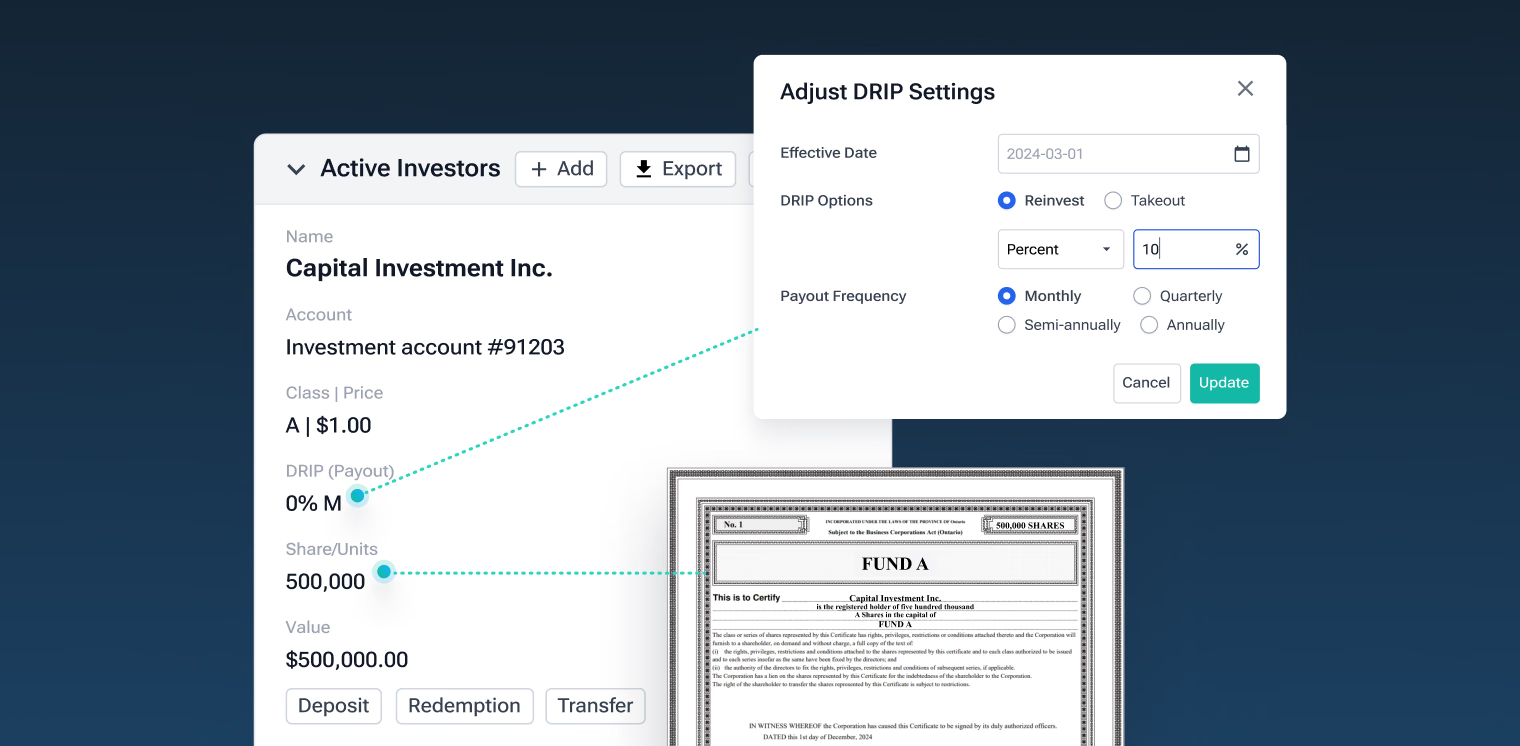
Investor management features help teams track investor profiles, ownership shares, participation terms, payout schedules, and distribution history. This is particularly important when loans involve multiple investors or different participation structures.
Automated Payout Calculations
Automated payout calculations reduce the need to manually rebuild investor distribution formulas. The system should calculate payouts based on loan terms, payment activity, ownership shares, servicing fees, and agreed distribution rules.
Reconciliation Workflows
Reconciliation workflows help teams compare borrower payments, account activity, loan balances, investor splits, and payout records before distributions are finalized. They also make it easier to identify mismatches that need review.
Reporting and Analytics
Reporting tools should support investor statements, payment histories, distribution reports, portfolio summaries, and servicing performance views. For accounting teams, this reduces manual report preparation and improves visibility across active loans.
Document Management
Document management keeps loan files, servicing records, investor documents, statements, and payment-related materials tied to the correct loan or account. This helps teams find supporting records during reviews, reconciliations, or investor questions.
Audit Trails
Audit trails show who changed a record, when the change happened, and what was updated. This visibility supports internal controls, accounting reviews, and audit-ready recordkeeping.
Borrower and Investor Portals
Borrower and investor portals provide external parties with secure access to the information they need, including payment activity, documents, statements, requests, and portfolio updates. This keeps borrower and investor communication closer to the underlying loan activity, which is useful during servicing reviews and reporting cycles.

Best Practices for Scaling Investor Accounting Operations
Once more investors and participation structures enter the portfolio, accounting teams need a better way to manage the routine work behind each payout cycle.
A few habits can make that work easier to manage:
- Centralize financial data: Keep payment activity, investor records, trust account details, reconciliation notes, and reporting data connected to the loan record.
- Reduce spreadsheet dependency: Use spreadsheets less for core accounting work, especially where formulas, copied files, or manual updates create avoidable risk.
- Standardize reconciliation processes: Apply the same review steps across loans, funds, and payout cycles so teams are not rebuilding the process each month.
- Automate investor communications: Use statements, reports, portal updates, and notifications to give investors consistent access to the information they need.
- Improve transparency: Make it easier to review how payments were received, allocated, reconciled, and distributed.
- Prepare for portfolio growth: Build accounting processes that can handle more loans, investors, exceptions, and reporting demands without adding unnecessary manual work.
The Bottom Line
Spreadsheets can work when servicing activity is limited, but they become harder to rely on as private lending portfolios grow. More loans, more investors, more payment scenarios, and more participation structures all increase the pressure on records that need to be accurate, current, and easy to verify.
Trust accounting and investor payout management both depend on clear visibility into how funds are received, allocated, reconciled, and distributed. When that work is spread across separate files, payout reviews take longer, reporting becomes harder to defend, and investor questions take more time to answer.
Mortgage Automator helps private lenders manage trust accounting, payouts, reconciliations, and investor reporting from the same servicing environment. To see how it can replace spreadsheet-heavy accounting workflows, book a free demo.
Frequently Asked Questions
What is trust accounting in private lending?
In private lending, trust accounting shows how loan-related funds are received, held, applied, and paid out. That includes borrower payments, escrow activity, investor funds, fees, and distribution records.
Why is trust accounting important for private lenders?
Trust accounting helps private lenders keep fund activity accurate, separated, and easier to review. It supports reconciliation, investor reporting, audit readiness, and clearer records around how money moves through each loan.
What software should private lenders use for trust accounting?
Private lenders should use purpose-built loan servicing software that supports payment tracking, trust account activity, investor management, reconciliations, reporting, and audit trails. General accounting tools may not be enough when trust accounting is tied closely to loan servicing activity.
How can lenders automate investor payouts?
Lenders can automate investor payouts by using software that tracks ownership shares, participation terms, payment activity, servicing fees, and distribution rules. This reduces manual calculations and helps payouts reflect the structure of each loan.
What tools help reconcile lender payouts and investor splits?
The best tools compare borrower payments, trust account activity, investor shares, payout records, and statements before distributions are finalized. They should also flag mismatches and keep a record of what was reviewed or corrected.
How does loan servicing software improve accounting accuracy?
Loan servicing software gives accounting teams fewer disconnected records to reconcile. Payments, balances, investor shares, payout history, and reporting data are easier to review when they are tied to the loan.
Can software automate investor reporting for mortgage portfolios?
Yes. Software can produce investor statements, distribution reports, payment histories, and portfolio updates from servicing activity already in the system. Investors get clearer visibility, and lenders spend less time assembling reports.
When should lenders move away from spreadsheets for servicing operations?
Lenders should move away from spreadsheets when reconciliations take too long, payout reviews require too many manual checks, reports are hard to verify, or multiple team members are working from different versions of the same records.