
Loan servicing is where lending operations either stay controlled or start to leak time. Once a loan is funded, the team still has to manage payments, borrower questions, escrow activity, renewals, exceptions, reporting, compliance records, and portfolio visibility. When that work lives across spreadsheets, inboxes, and disconnected tools, every update becomes harder to provide - and harder for recipients to trust.
That is why choosing a servicing platform takes more than quickly scanning loan servicing software reviews. Reviews can show how other lenders experience a product, but they cannot tell you whether the system fits your loan types, team workflows, borrower expectations, reporting needs, or growth plans.
The right loan servicing software gives lenders a more reliable way to manage active loans after funding. It helps reduce manual work, support compliance, improve borrower communication, and keep portfolio management from becoming a monthly scramble.
Why Loan Servicing Software Matters
Loan servicing software helps lenders manage the work that starts after a loan is funded. That includes payment schedules, borrower communication, escrow activity, interest calculations, statements, reporting, compliance records, and portfolio monitoring.
A servicing platform becomes more important as the portfolio grows. A small team may be able to manage a limited number of loans with spreadsheets and manual reminders. But as loan volume increases, so does the risk of missed updates, incorrect payment records, delayed borrower communication, and inconsistent reporting.
Manual servicing processes tend to break in quiet ways. A payment change may be updated in one spreadsheet but not another. A borrower request may sit in an inbox. Investor reports may need to be rebuilt each month from multiple files. Compliance records may be stored separately from the loan history. None of these issues seem dramatic at first, but together they create operational drag.
Loan servicing software gives lenders a structured way to manage those responsibilities. It helps keep payment activity, borrower records, servicing tasks, documents, reporting, and compliance information tied to the loan.
Step 1: Define Your Business Requirements
Before comparing platforms, lenders need to define what the software has to support. A system that works well for one lender may not fit another lender’s portfolio, loan types, reporting needs, or internal process.
Start with the basics: what types of loans do you service? A lender managing residential mortgages may need different workflows than a private lender handling bridge loans, construction loans, hard money loans, commercial loans, or mixed portfolios. Commercial and private lending often involve more exceptions, custom terms, investor structures, and manual review steps than standardized residential lending.
Portfolio size also matters. A servicing process that works for 25 active loans may not hold up at 250 or 2,500. As volume grows, lenders need stronger controls around payment tracking, borrower communication, portfolio reporting, task ownership, and exception management.
Team structure should be part of the evaluation as well. Some lenders have dedicated servicing teams. Others split servicing work across operations, accounting, loan officers, administrators, and investor relations. The platform should support how the work actually moves, not force the team into a rigid process that creates more side work.
Compliance needs, integration requirements, and growth plans should also be documented before the search begins. If the lender needs accounting integrations, borrower portals, investor reporting, escrow management, automated payment processing, or configurable workflows, those requirements should be clear before demos begin.
Step 2: Evaluate Essential Features
Once the requirements are clear, the next step is to evaluate the core capabilities of each servicing platform. The goal is to understand which features will reduce manual work, improve accuracy, and give the team better control over the servicing process.
Automated Payment Processing
Payment processing is one of the most important servicing workflows to evaluate. Lenders need to know how the platform handles scheduled payments, payment changes, late payments, payoffs, renewals, adjustments, and payment history.
Automated payment workflows help reduce manual entry and make it easier to keep borrower and loan records updated. They also help servicing teams avoid repeated spreadsheet checks or manual reconciliation when payment amounts, dates, or loan terms change.
Borrower Portal
A borrower portal gives borrowers a digital place to access information, upload documents, view requests, and stay updated. This reduces routine emails and gives the servicing team fewer one-off questions to answer manually.
For lenders with growing portfolios, borrower self-service can improve the experience without adding more administrative work for the team.
Escrow and Interest Management
Escrow, interest, per diem calculations, penalties, fees, and payoff details can become difficult to manage manually. The platform should help lenders calculate and track these items consistently, especially when loans have custom terms or changes after funding.
Document Management
Servicing does not stop with payment records. Lenders also need to store and access loan documents, borrower files, statements, notices, approvals, and servicing records.
Document management helps keep the file organized after closing. It also gives servicing, accounting, compliance, and investor-facing teams a more reliable way to find the information they need.
Workflow Automation
Workflow automation helps move tasks, reminders, approvals, alerts, and follow-up steps through the servicing process. Instead of relying on someone to remember the next action, the system can help trigger it based on loan activity or predefined rules.
This is important because servicing teams often manage a mix of routine work and exceptions. Automation helps reduce the routine admin so the team can focus on the files that need attention.
Compliance and Audit Trails
Loan servicing involves records that may need to be reviewed later. The platform should help preserve activity history, document updates, communication records, task completion, approvals, and payment-related actions.
Audit trails are useful for internal review, compliance support, and operational accountability. They also reduce the risk that important decisions or updates live only in emails or personal notes.
Portfolio Reporting
Portfolio reporting helps lenders see the status of active loans, payment activity, delinquencies, upcoming renewals, payoffs, investor exposure, and overall performance.
Strong reporting gives managers and executives a better view of risk, workload, and growth. It also reduces the need to build reports manually from disconnected systems.
Accounting and Integrations
Servicing data often needs to connect with accounting tools, payment processors, document systems, CRMs, e-signature tools, and reporting environments. A platform should support the systems the lender already depends on, or offer a clear path to connect them.
Integrations matter because disconnected systems can create duplicate entries. The more often the team has to copy information from one system to another, the higher the risk of errors.
Step 3: Compare Loan Servicing Software Reviews
Loan servicing software reviews are useful because they show how real users describe a platform after implementation. They can reveal patterns around ease of use, customer support, reporting, onboarding, reliability, customization, and product gaps.
Still, reviews should be only one part of the evaluation. A high rating does not automatically mean the platform is right for your lending business. A low review may reflect a use case that has nothing to do with your team. The value is in the details.
Look beyond the star rating and read what customers say about daily use. Do reviewers mention support response times? Do they describe implementation as easy or difficult? Do they say the platform works well for private lending, hard money lending, mortgage servicing, or commercial lending? Do they mention reporting, automation, integrations, or portfolio visibility?
Customer support is extremely important. Loan servicing software becomes part of daily operations, so the vendor’s support model matters after the contract is signed. Reviews can help show whether customers feel supported when they need help, changes, training, or troubleshooting.
Scalability is another area to watch. A platform may work well for a small portfolio but struggle as the lender grows. When reviewing feedback, look for signs that the software supports expanding loan volume, new workflows, additional users, and more complex reporting needs.
It is also worth looking at the vendor's reputation and product roadmap. Lenders should understand whether the platform is actively improving, whether the vendor understands their market, and whether the system is built for their type of lending.
Step 4: Compare the Best Loan Management Software Options
When lenders compare the best loan management software, the goal is to find which platform can support the lender’s servicing model, portfolio growth, team structure, compliance requirements, and reporting needs.
Cloud-based platforms are often easier for distributed teams because users can access the system without relying on local installations. They can also make updates, permissions, and remote access easier to manage. On-premise systems may still appeal to some organizations, but they often require more internal IT involvement and maintenance.
Configurability is another major factor. Lenders should look at whether the platform can support different loan types, payment structures, workflow stages, user roles, reports, and document needs. A rigid system may create manual workarounds when the lender’s process does not fit the default setup.
Automation capabilities should be evaluated carefully. A strong platform should help automate servicing tasks, notifications, payment workflows, document activity, approvals, and reporting steps. Automation is useful only when it reflects how the lender actually works.
Reporting should also be part of the comparison. Managers need visibility into portfolio performance, servicing workload, borrower activity, payment status, and investor reporting. If reports require manual exports and spreadsheet cleanup, the software may not solve the real problem.
User experience matters because servicing software is used every day. If the platform is difficult to navigate, the team may avoid using it properly or build side processes outside the system.
What Is the Best Loan Management Software?
The best loan management software should give lenders one reliable place to manage active loan work: borrower records, payments, servicing tasks, documents, reports, and portfolio activity.
For private lenders, that also means flexibility. Loan terms change, exceptions happen, investors need updates, and servicing teams need to see what is current without chasing the file across multiple tools.
The right choice is the platform that helps the team manage the loan after funding with less manual recovery.
Loan Servicing Software vs Mortgage Origination Software
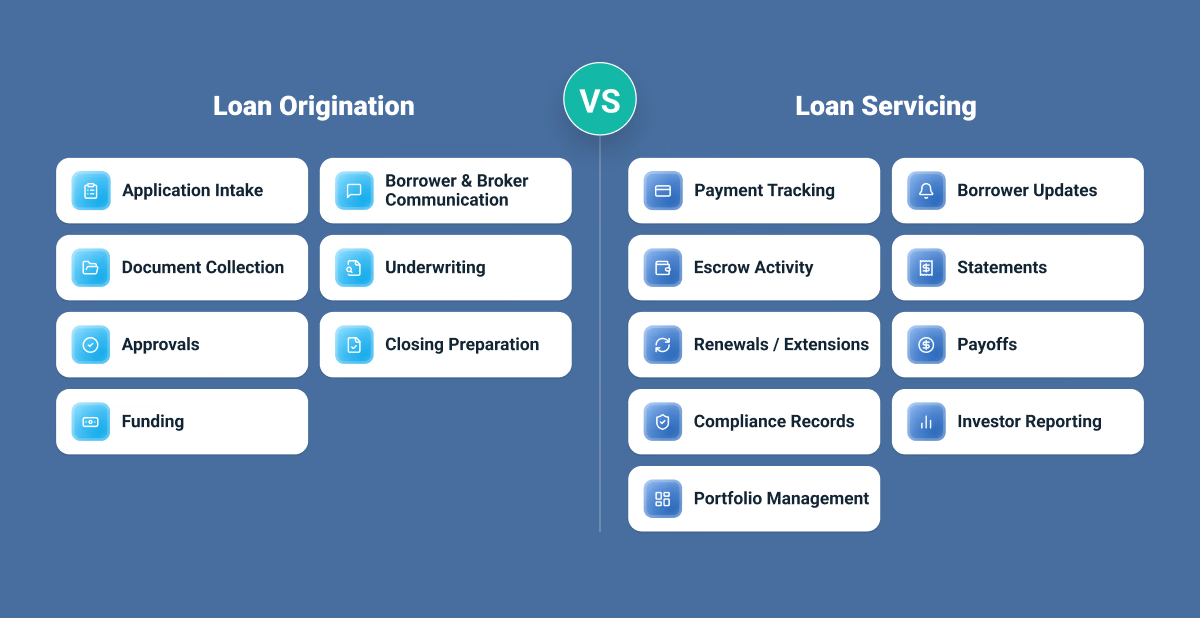
Loan origination software and loan servicing software support different parts of the lending lifecycle. Origination software manages the work before funding. Servicing software manages the work after funding.
Origination usually includes application intake, borrower and broker communication, document collection, underwriting, approvals, conditions, closing preparation, and funding. Servicing begins once the loan is active and includes payment tracking, borrower updates, escrow activity, statements, renewals, payoffs, compliance records, investor reporting, and portfolio management.
When lenders compare the best mortgage software, they should look at both sides of the lifecycle. A strong origination tool can help the team move qualified loans to funding faster. A strong servicing tool can help the team manage the loan after closing without creating manual work.
Good mortgage origination software should support intake, workflow automation, document management, approvals, and funding preparation. Servicing software should support the operational work that continues after closing: payments, communication, reporting, compliance, and portfolio oversight.
Many lenders eventually need both. If origination and servicing systems are disconnected, the team may have to re-enter loan data after funding, rebuild files, or manually transfer documents. That creates delays and increases the chance of errors.
Connected platforms can reduce this handoff. When loan data, documents, borrower records, payment details, and reporting activity stay connected, the lending team has a stronger operating flow from application through servicing.
Questions to Ask During a Software Demo
A software demo should show how the platform handles real servicing work. Use the demo to test the vendor against your actual workflows, data, reports, and support needs.
Ask questions such as:
- How long does implementation usually take?
Ask what setup includes, who handles configuration, what your team needs to prepare, and what can delay launch. - How does data migration work?
If you are moving from spreadsheets, legacy software, or another servicing system, ask what data can be migrated and how loan records are checked. - What security controls are included?
Review access controls, user permissions, data protection, backups, audit trails, and compliance-related safeguards. - What does support look like after launch?
Ask how issues are handled, whether training is included, and how the vendor supports workflow changes over time. - Can the platform support our loan types and servicing rules?
Test whether it can handle your payment structures, document templates, reports, borrower communication needs, and investor reporting process. - Which integrations are available?
Ask how the system connects with accounting tools, payment processors, CRMs, e-signature tools, document systems, and reporting environments. - What reporting can we see in the demo?
Ask for real examples of portfolio reports, payment reports, servicing activity, exception tracking, and export options. - What is included in the price?
Confirm what costs extra, including implementation, training, integrations, support, additional users, custom reports, or future configuration changes. - How often is the platform updated?
Ask how product updates are released, how customers are informed, and whether the roadmap supports the lending workflows you need.
Common Mistakes When Choosing Loan Servicing Software
The wrong platform can create more work than it removes. Watch for these mistakes during evaluation:
- Choosing based only on price: A cheaper platform can become expensive if the team still needs spreadsheets, extra tools, manual reports, or a second system to finish daily servicing work.
- Ignoring scalability: The software should support the portfolio you have now and the portfolio you expect to manage later. If it cannot handle more loans, users, reports, or servicing workflows, another migration may come sooner than expected.
- Underestimating implementation: Even strong software needs planning, configuration, data migration, training, and adoption. If the right stakeholders are not involved early, the setup may not reflect how servicing work actually happens.
- Focusing only on features: A long feature list does not mean the platform fits your process. Test how the features work together across payments, borrower communication, reporting, documents, and compliance.
- Overlooking customer support: Support matters most after launch. Read loan servicing software reviews for patterns around response times, training, implementation help, and ongoing account support.
- Skipping a live demo: Lenders should see how the platform handles real servicing workflows before making a decision. A demo can show whether the system is intuitive, configurable, and strong enough for daily operations.
- Leaving key users out of the decision: Servicing, accounting, compliance, operations, and investor-facing teams may all rely on the platform. If they are not part of the evaluation, important workflow needs can be missed.
Final Thoughts
Loan servicing software is a long-term operating decision. The platform you choose will shape how your team manages payments, borrowers, reporting, compliance, and portfolio visibility.
The best choice is the system that fits your servicing workflows now and can still support the business as loan volume, reporting needs, and operational complexity grow.
Frequently Asked Questions
What is loan servicing software?
Loan servicing software helps lenders manage loans after funding. It supports payment tracking, borrower communication, escrow activity, statements, reporting, compliance records, and portfolio management.
How do I compare loan servicing software reviews?
Compare loan servicing software reviews by looking beyond star ratings. Pay attention to customer support, implementation experience, scalability, reporting, ease of use, and whether reviewers describe lending workflows similar to yours.
What is the best loan management software?
The best loan management software depends on the lender’s business model, portfolio size, loan types, automation needs, compliance requirements, and reporting workflows. The right choice should support both current operations and long-term growth.
What’s the difference between loan servicing software and loan origination software?
Loan origination software manages the process before funding, including applications, underwriting, approvals, conditions, and closing preparation. Loan servicing software manages the loan after funding, including payments, borrower updates, reporting, compliance, and portfolio activity.
What features should loan servicing software include?
Loan servicing software should include automated payment processing, borrower communication, escrow and interest management, document management, workflow automation, compliance records, portfolio reporting, accounting tools, and integrations.
Can loan servicing software automate payment processing?
Yes. Loan servicing software can help automate scheduled payments, payment tracking, payment updates, payoff calculations, borrower notices, and related servicing workflows.
How do I choose the right loan servicing platform?
Start by defining your loan types, portfolio size, servicing workflows, compliance needs, integrations, reporting requirements, and growth plans. Then compare platforms through demos, workflow testing, customer feedback, and loan servicing software reviews.